

 In focus
Notes on building training data that models can trust
Practical guides from the VIPRO team on how data annotation works, why data quality decides model performance, and how we label at production scale.
Notes from the intersection of data, people, and the models we’re teaching to see.
The VIPRO blog publishes practical engineering guides on AI data annotation. Articles cover how data annotation works, why training data quality decides model performance, how to choose an annotation provider or vendor, and how to label egocentric and sports video. Each guide draws on the way VIPRO runs projects: written labelling rules, a calibration pilot on your own data and two-stage QA with an annotator self-check and an independent reviewer audit. Use the guides to plan a dataset, brief a vendor or start a pilot.
In focusPractical guides from the VIPRO team on how data annotation works, why data quality decides model performance, and how we label at production scale.
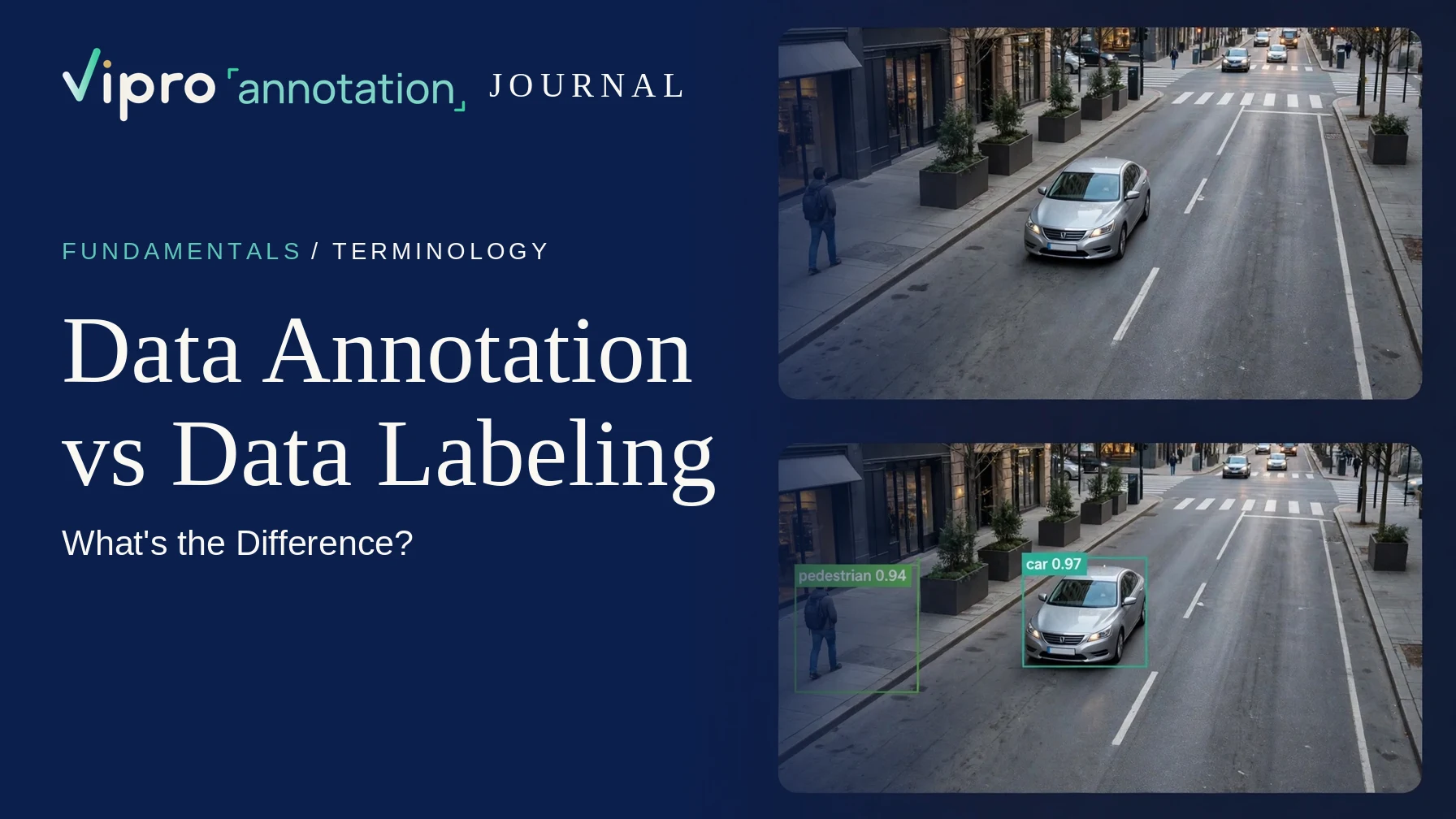 Fundamentals
Data annotation and data labeling are often used as synonyms. Learn where the terms overlap, where they differ, and what it means when you hire a vendor.
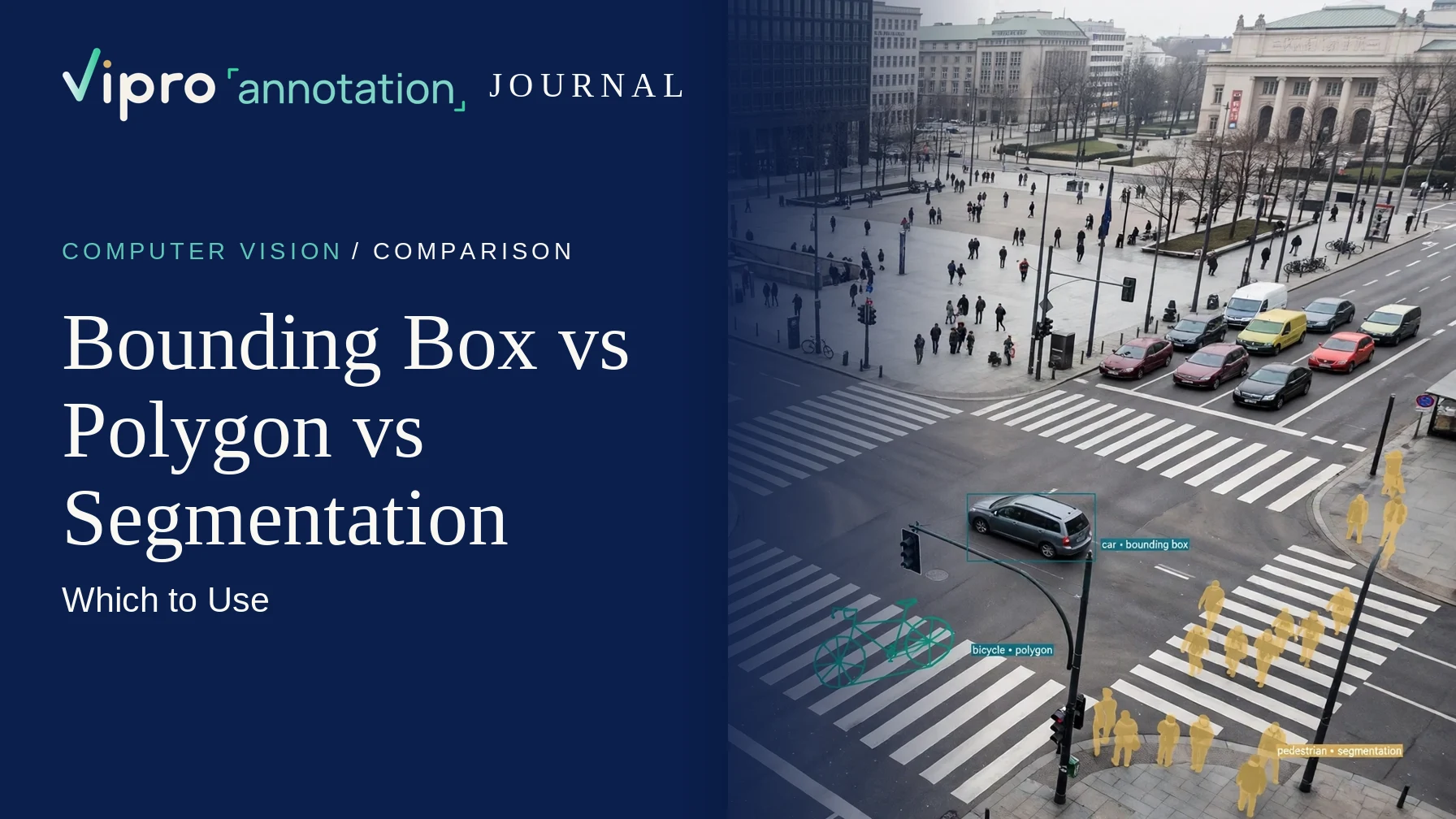 Comparison
Compare bounding boxes, polygons and segmentation masks for computer vision: accuracy, labeling effort, cost drivers and when each annotation type fits.
 Buyer's guide
How data annotation is priced: per object, per image, per hour or per project. The factors that move cost, and the questions to ask before you sign a quote.
 Buyer's guide
Should you outsource data annotation or build an in-house labeling team? Compare control, cost, speed, security and quality, with a checklist to decide.
 Practical guide
A practical guide to LiDAR point cloud annotation: 3D cuboids, segmentation, camera-LiDAR fusion, multi-frame tracking and the QA checks that catch errors.
 Practical guide
What RLHF data annotation involves: demonstrations, preference ranking and rubrics, how reward models use the labels, and how to keep rater quality high.
 Practical guide
What inter-annotator agreement measures, how Cohen's kappa, Fleiss' kappa and IoU work, and how to read a vendor's agreement number before you trust it.
 Practical guide
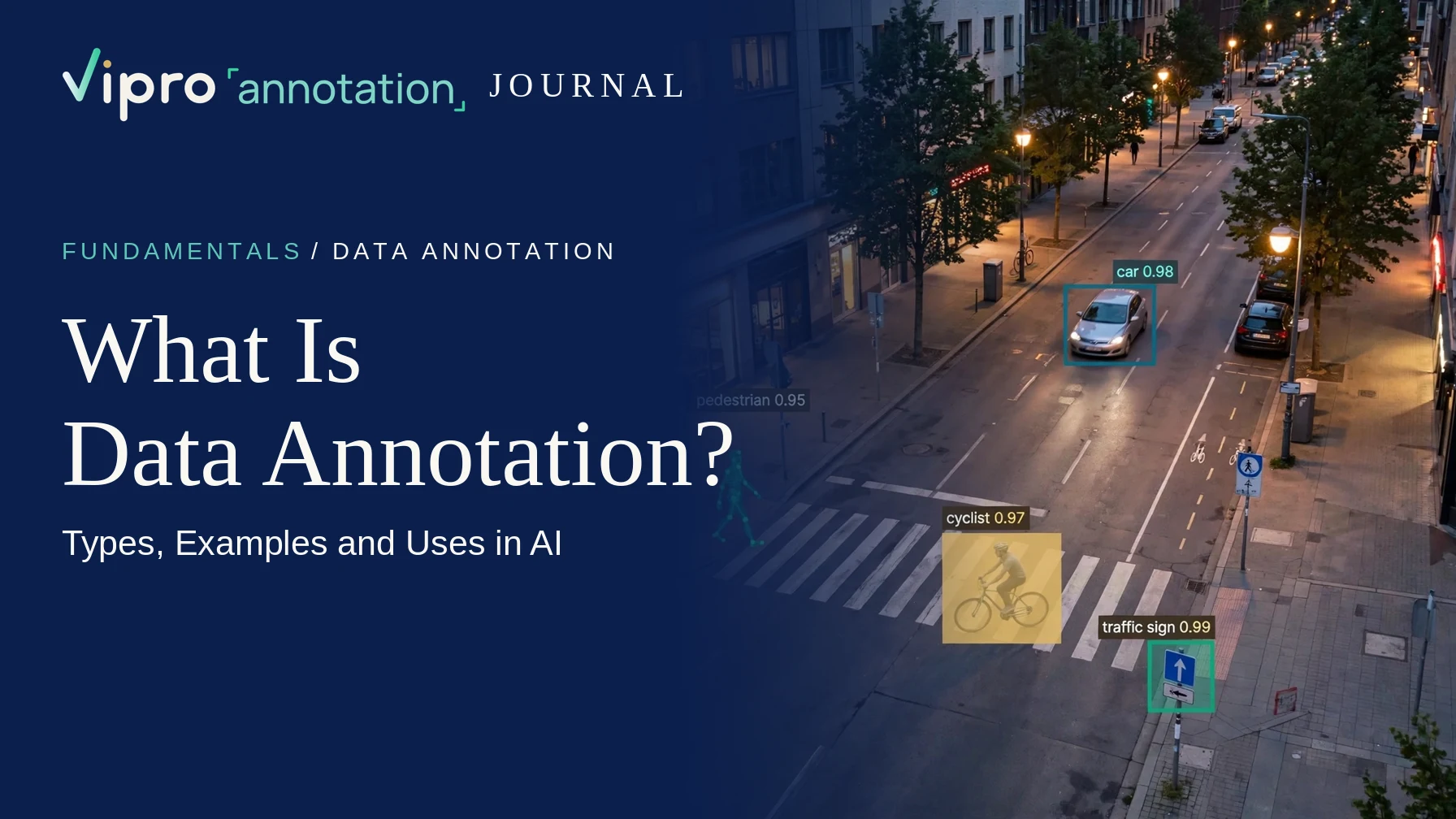
Data annotation is adding labels to images, video, text, audio and 3D data so AI models can learn. See the main types, real examples and how quality is checked.
 Practical guide
How video annotation works: object tracking across frames, keyframes and interpolation, action and event labels, edge cases, and QA checks for video data.
 Practical guide
Semantic, instance and panoptic segmentation compared: what each labels, how annotation differs, which models use them and how to choose for your dataset.
 Practical guide
A practical template for data annotation guidelines: class definitions, edge cases, examples, decision rules, versioning and calibration, with a free outline.
 Practical guide
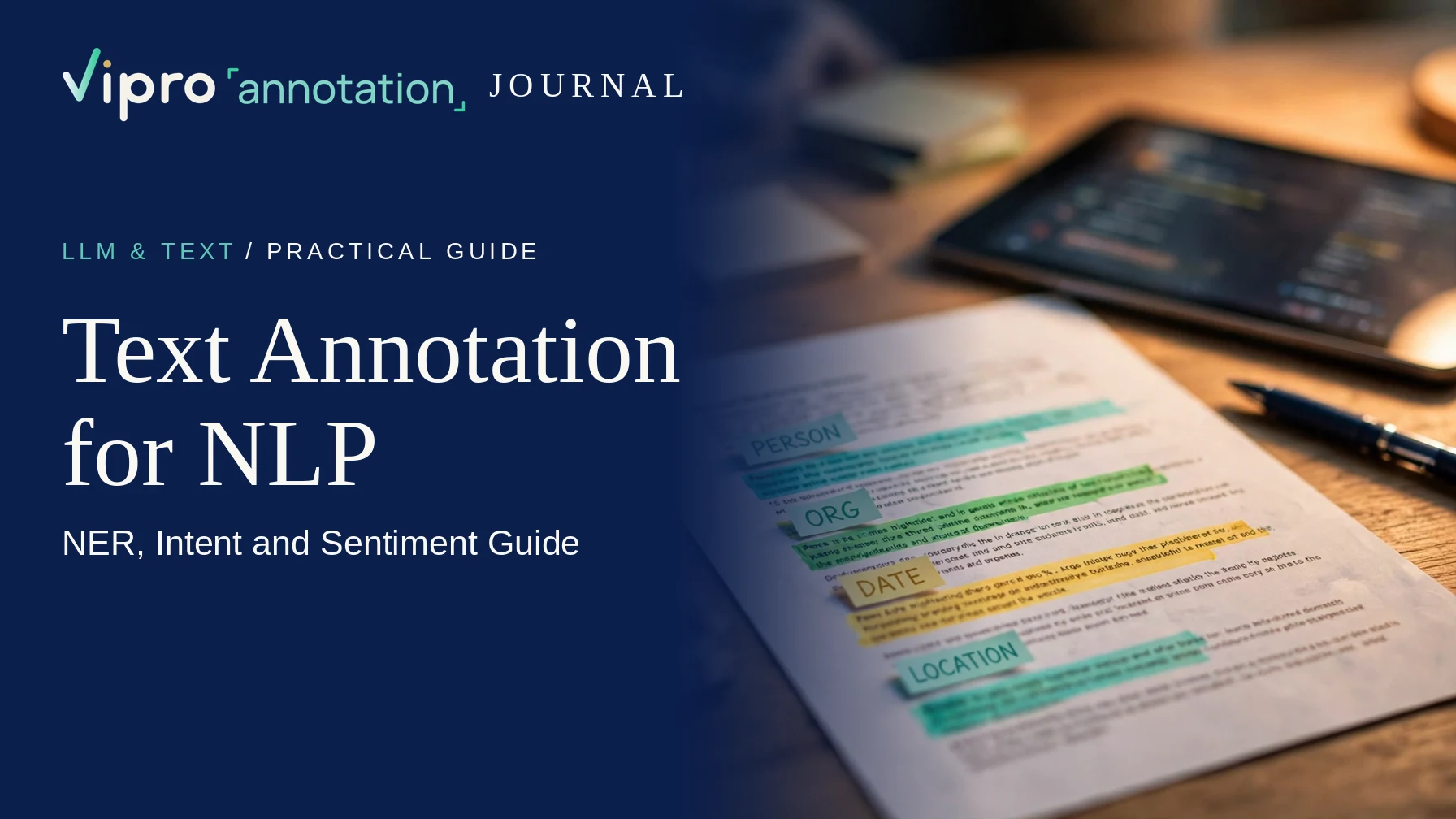
A guide to text annotation for NLP and LLMs: named entity recognition, intent, sentiment, relations and document labels, with edge cases and quality checks.
 Practical guide
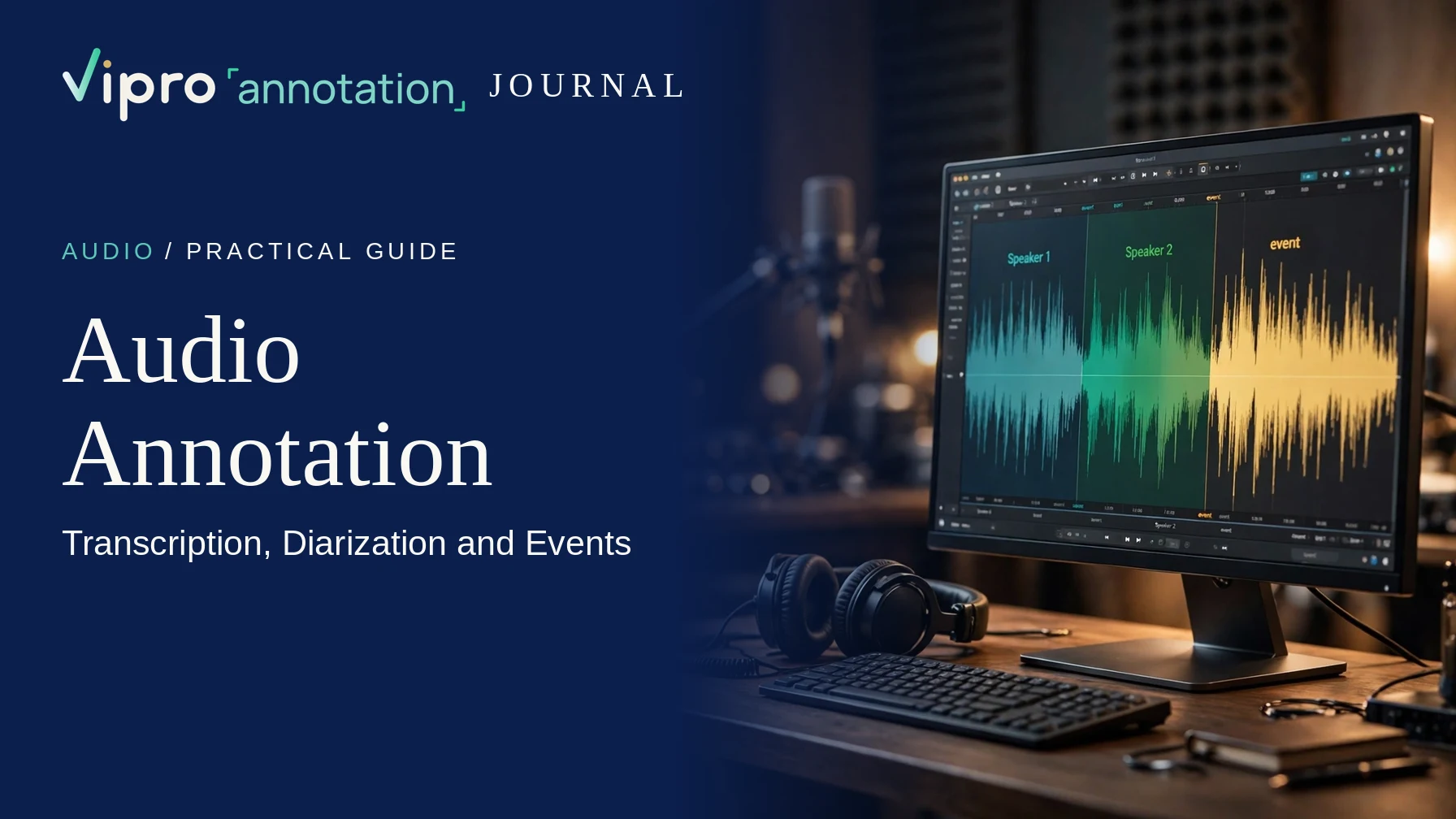
What audio annotation involves: speech transcription, speaker diarization, sound event labels and timestamps, plus edge cases and QA checks for speech AI data.
 Practical guide
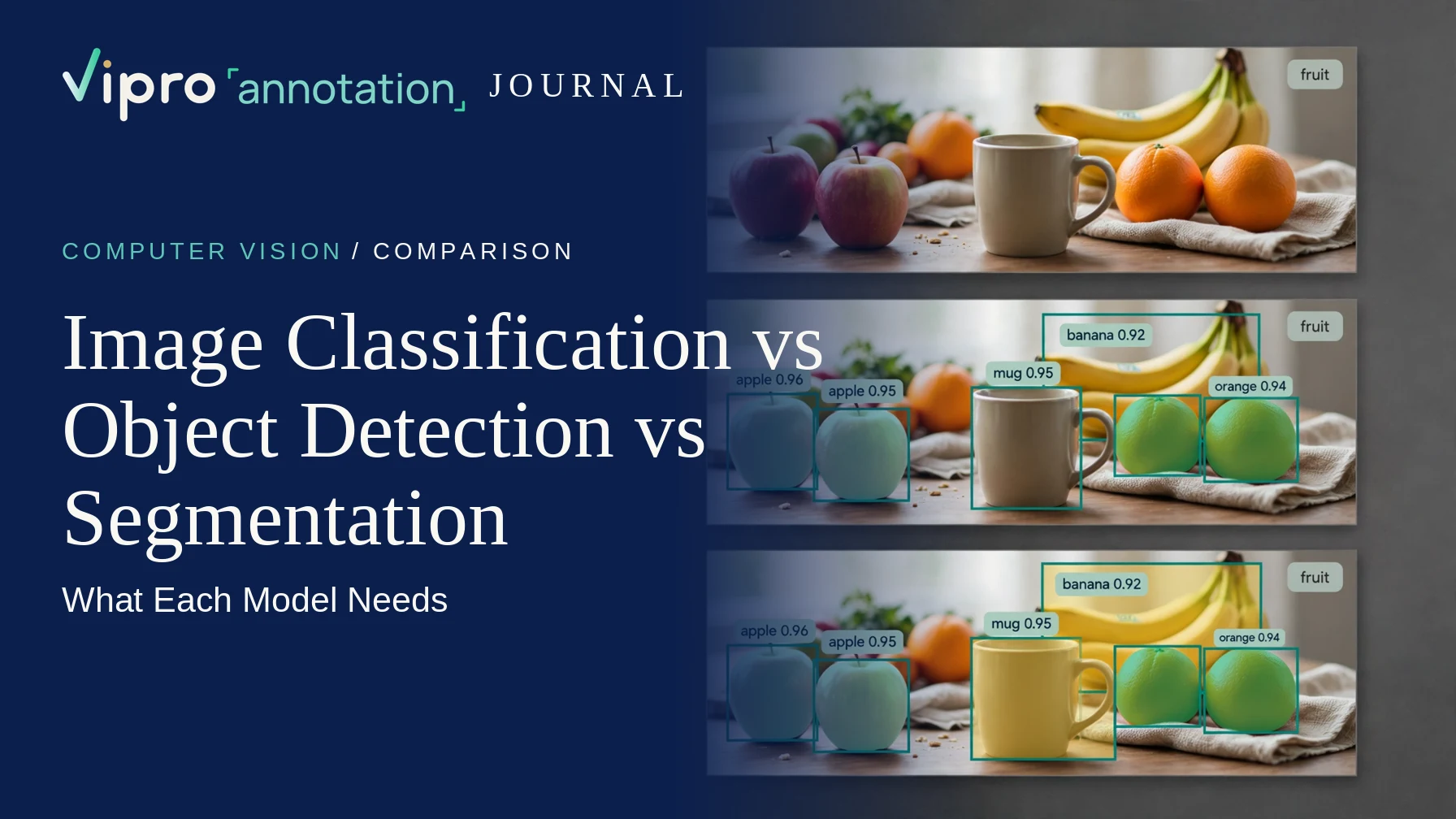
Image classification, object detection and segmentation compared: what each model outputs, the labels each needs, and how to pick the right task for your data.
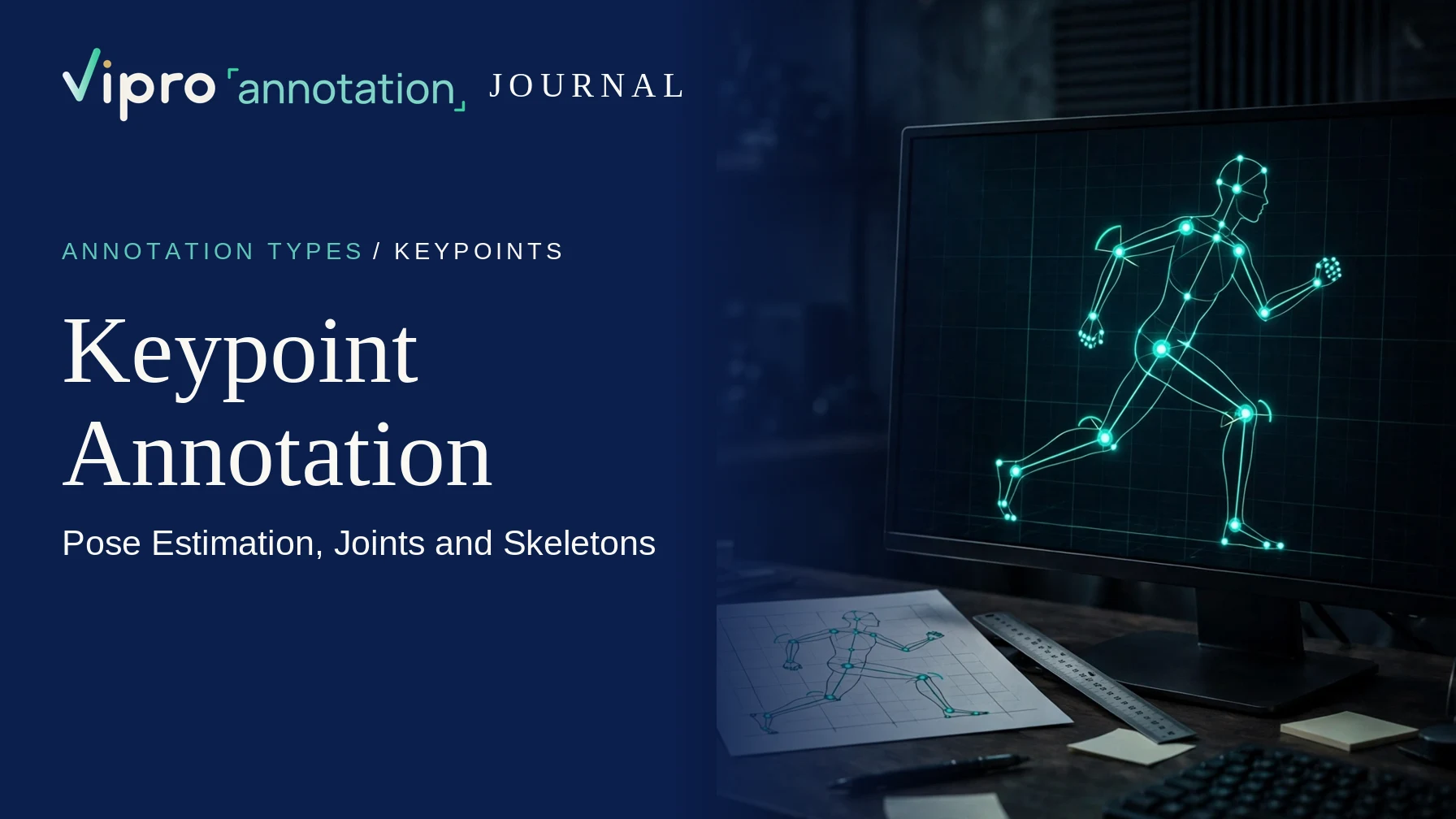 Practical guide
How keypoint annotation works for human pose, hands and faces: skeleton layouts like COCO's 17 points, visibility flags, edge cases and QA checks.
 Practical guide
How AI-assisted data labeling works: model pre-labels, tools like Segment Anything, where automation helps, where it fails, and why human review stays.
 Practical guide
A data annotation quality assurance process you can copy: review tiers, sampling, gold sets, agreement checks, error categories and annotator feedback.
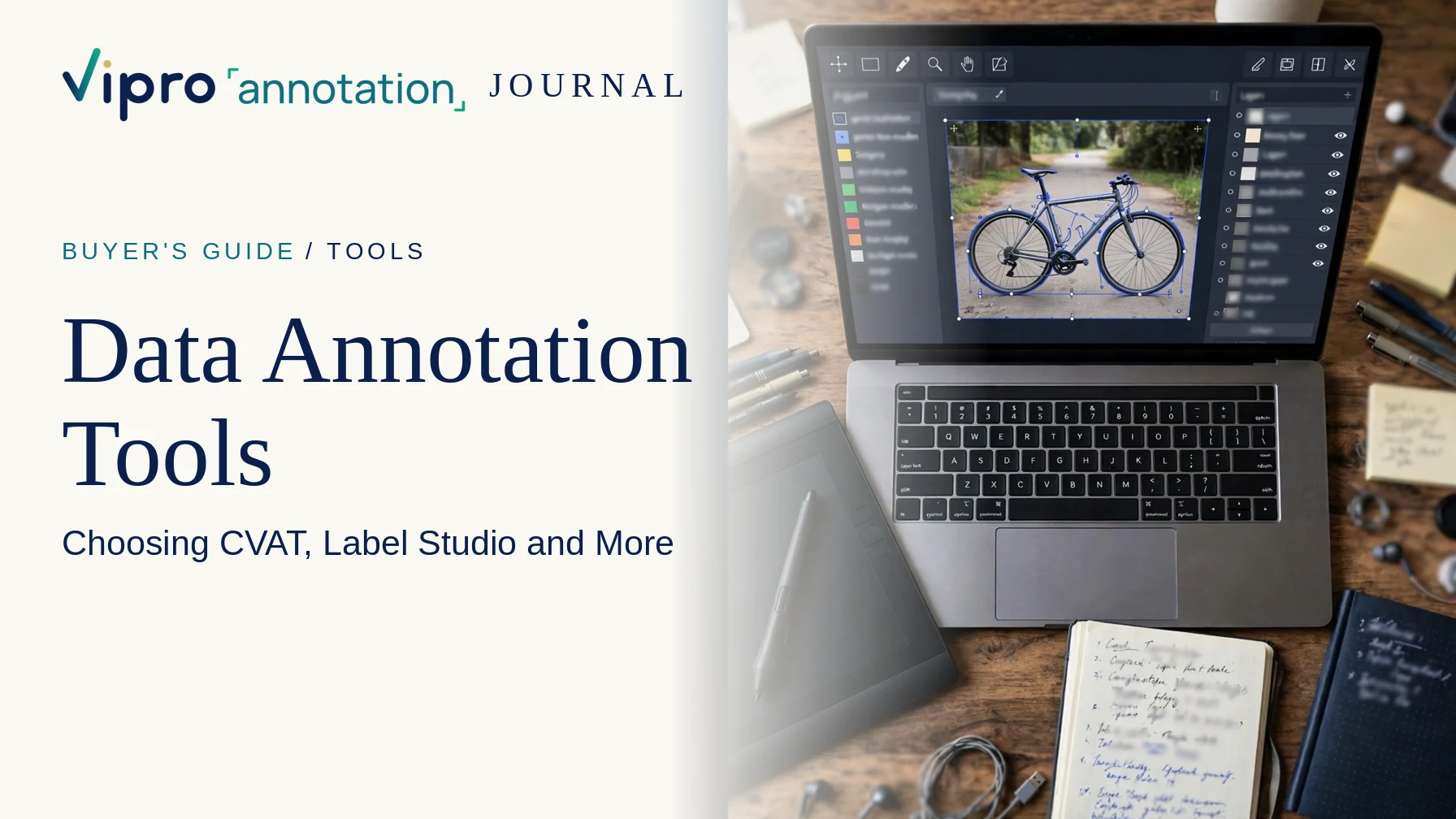 Buyer's guide
How to choose a data annotation tool: open-source CVAT and Label Studio vs commercial platforms, and the features that matter for images, video and text.
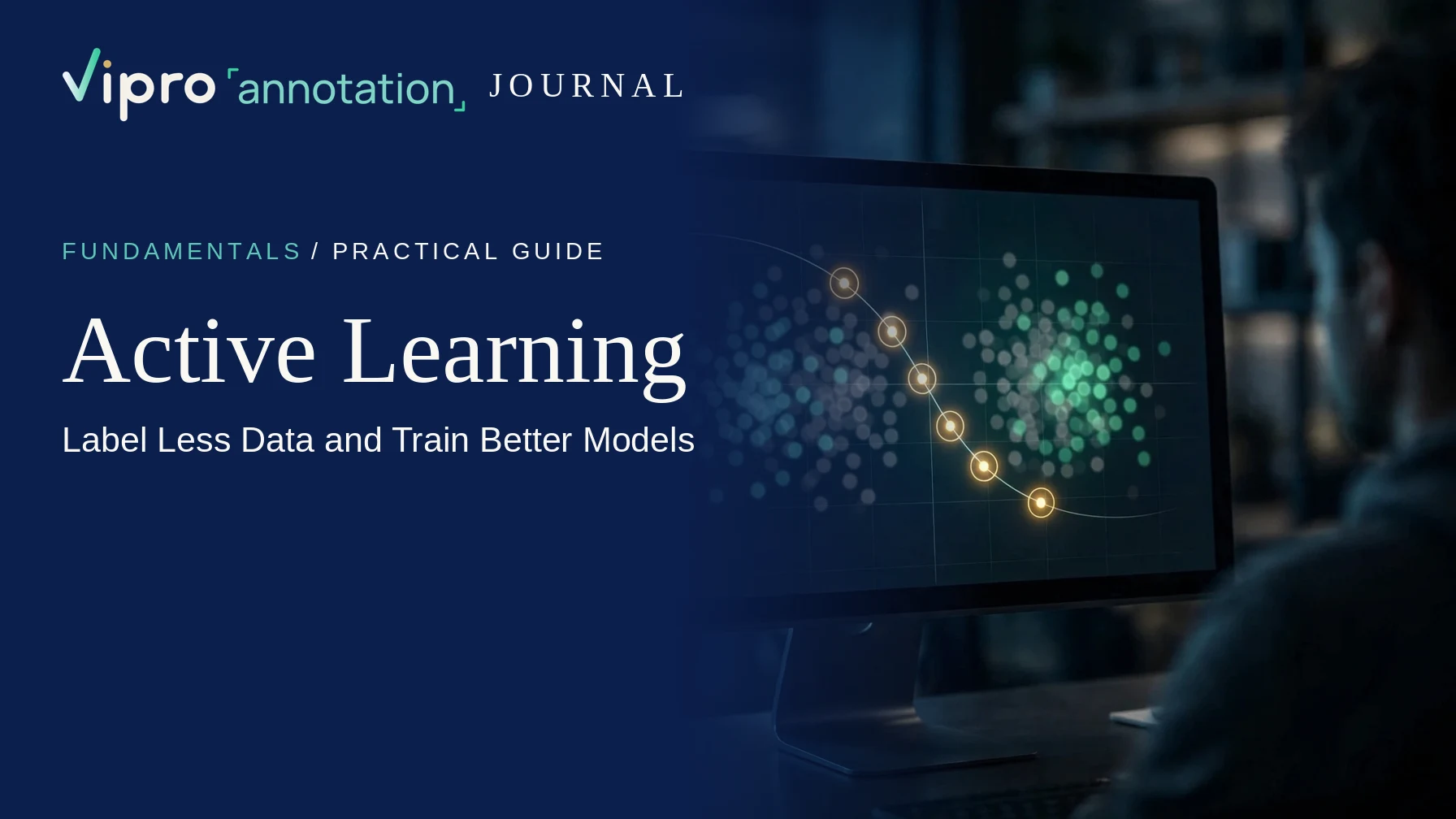 Practical guide
Active learning picks the most useful data to label next, so teams label less. How uncertainty and diversity sampling work, and when active learning helps.
 Practical guide
Synthetic vs real annotated data: what each is good for, the sim-to-real gap, cost and coverage trade-offs, and why teams still validate on real labeled data.
 Buyer's guide
How to keep training data safe when outsourcing annotation: NDAs, personal data redaction, access controls, secure environments, deletion and audit logs.
 Buyer's guide
A guide to outsourcing data annotation to an India-based team: time-zone handoffs, communication, quality controls, security and running a first pilot.
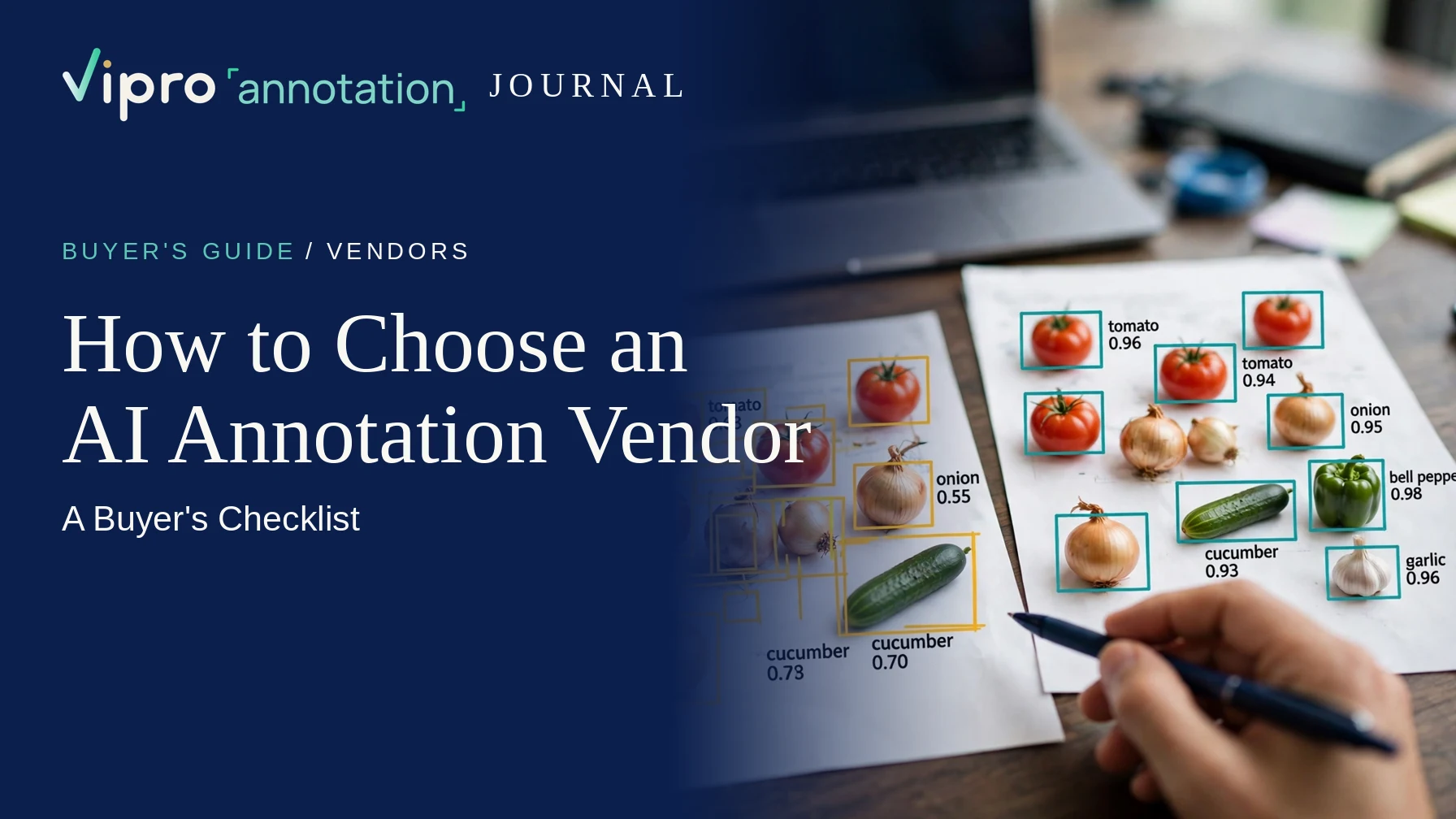 Buyer's guide
A side-by-side comparison of managed specialized pods, crowdsourcing platforms and generic BPOs, with the questions that reveal real differences.
 Practical guide
Before an AI model can recognize a person, understand an object, or follow an action, someone has to teach it what to look for.
 Practical guide
Better models do not begin with better algorithms. They begin with better examples.
 Buyer's guide
Most annotation vendors look the same on a sales call. The differences show up in the first batch of your hardest data.
 Industry guide
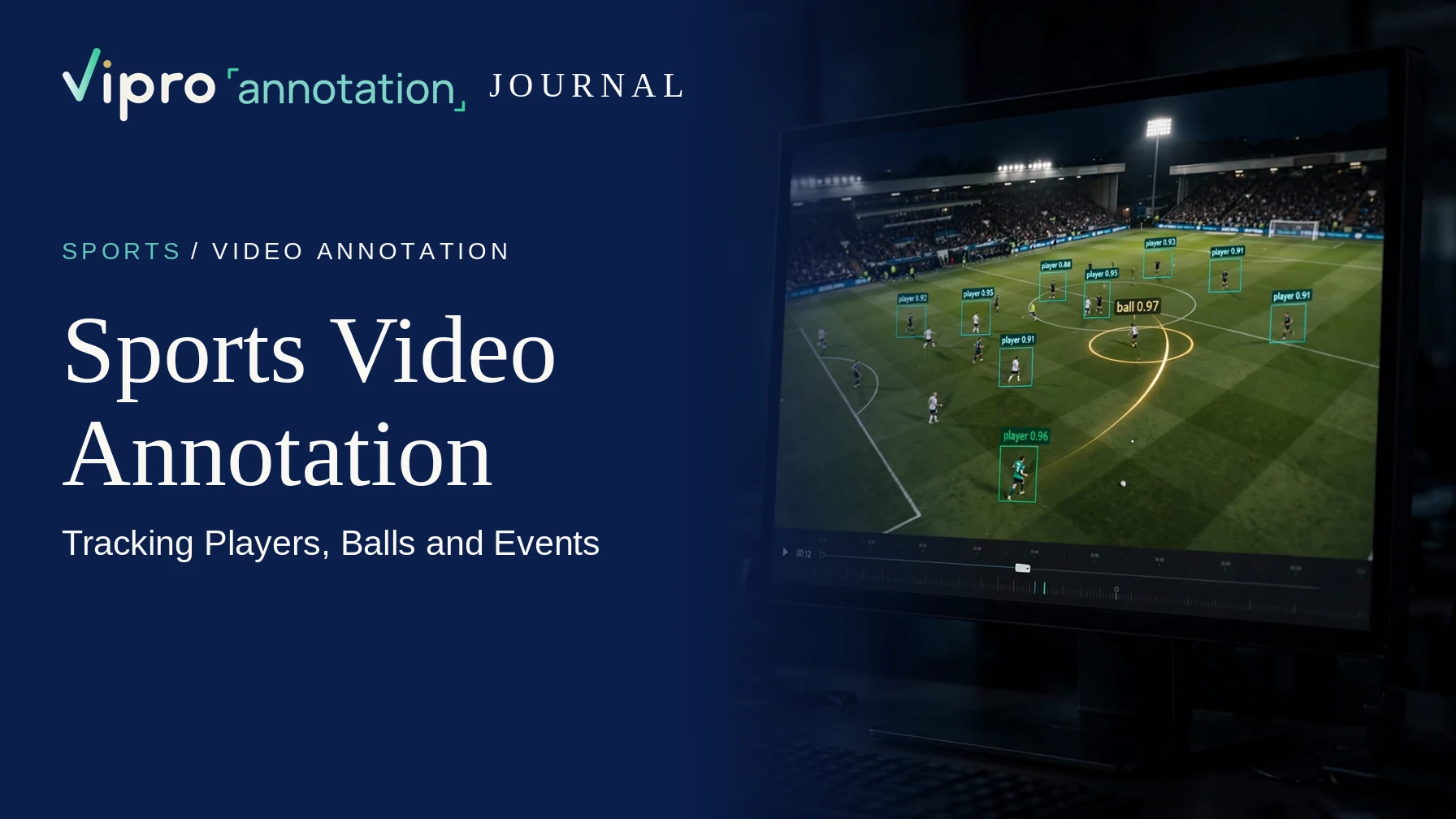
Before a sports model can follow the ball or recognise a shot, it has to be shown those moments frame by frame.
 Industry guide
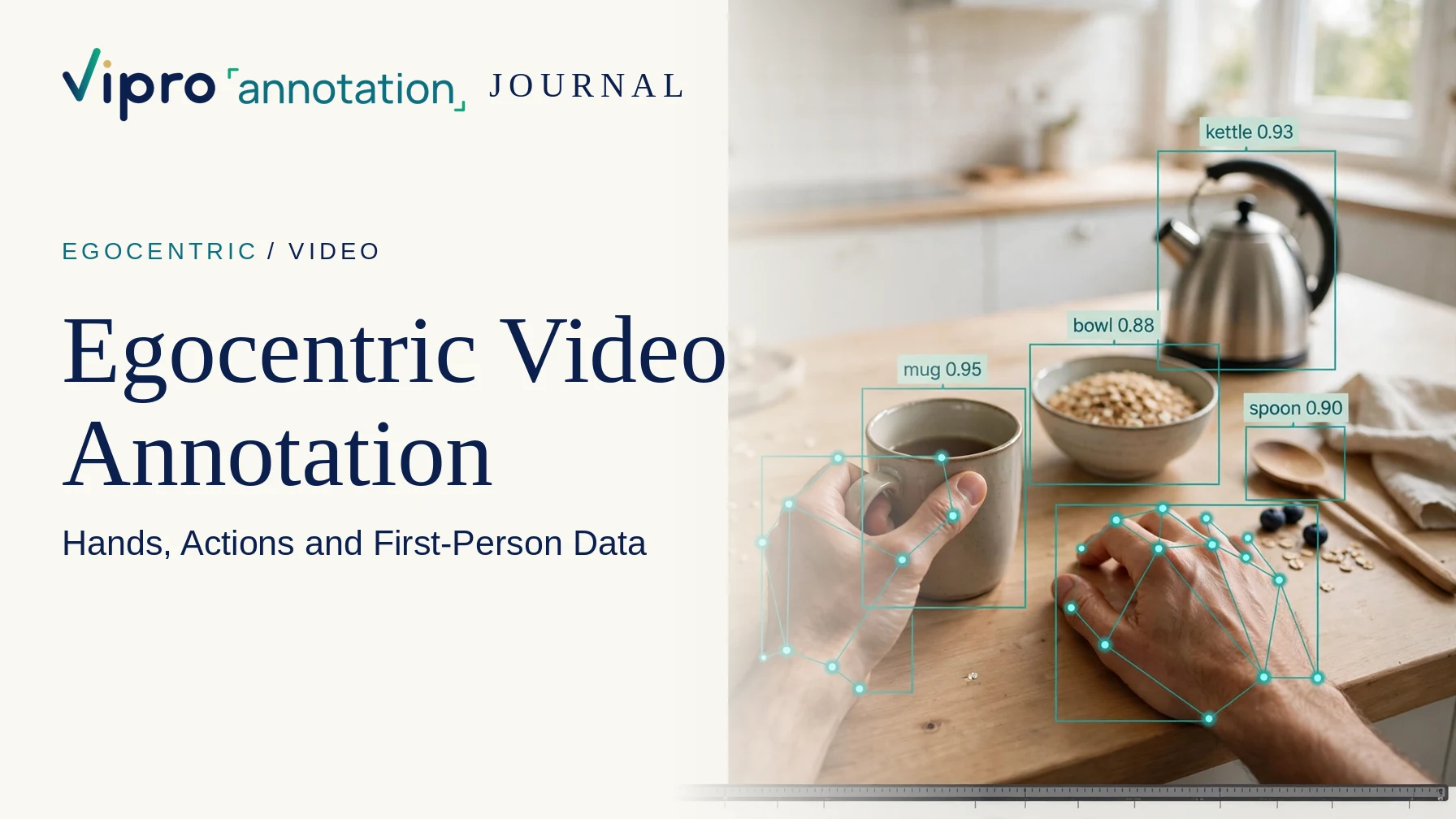
Footage from a head-mounted camera sees the world the way the wearer does. Teaching a model to understand it starts with careful labels.