



Audio Annotation Services

Turnsoundintosignalsyourmodelcanuse.

In our audio annotation services, sound becomes training data only when it has a clock: transcripts, speaker turns, intent, and non-speech events tied to ranges you can click and hear again — with a written policy for overlap, noise, and words that cannot be defended.

Audio annotation turns recordings into timestamped transcripts, speaker turns and acoustic event tags that speech and sound models can train on. VIPRO scores word error rate on calibrated samples against an audited target below 2 percent and reviews files in two QA stages.

AUDIO / CALL_2207.WAVREVIEW PASS · 000%
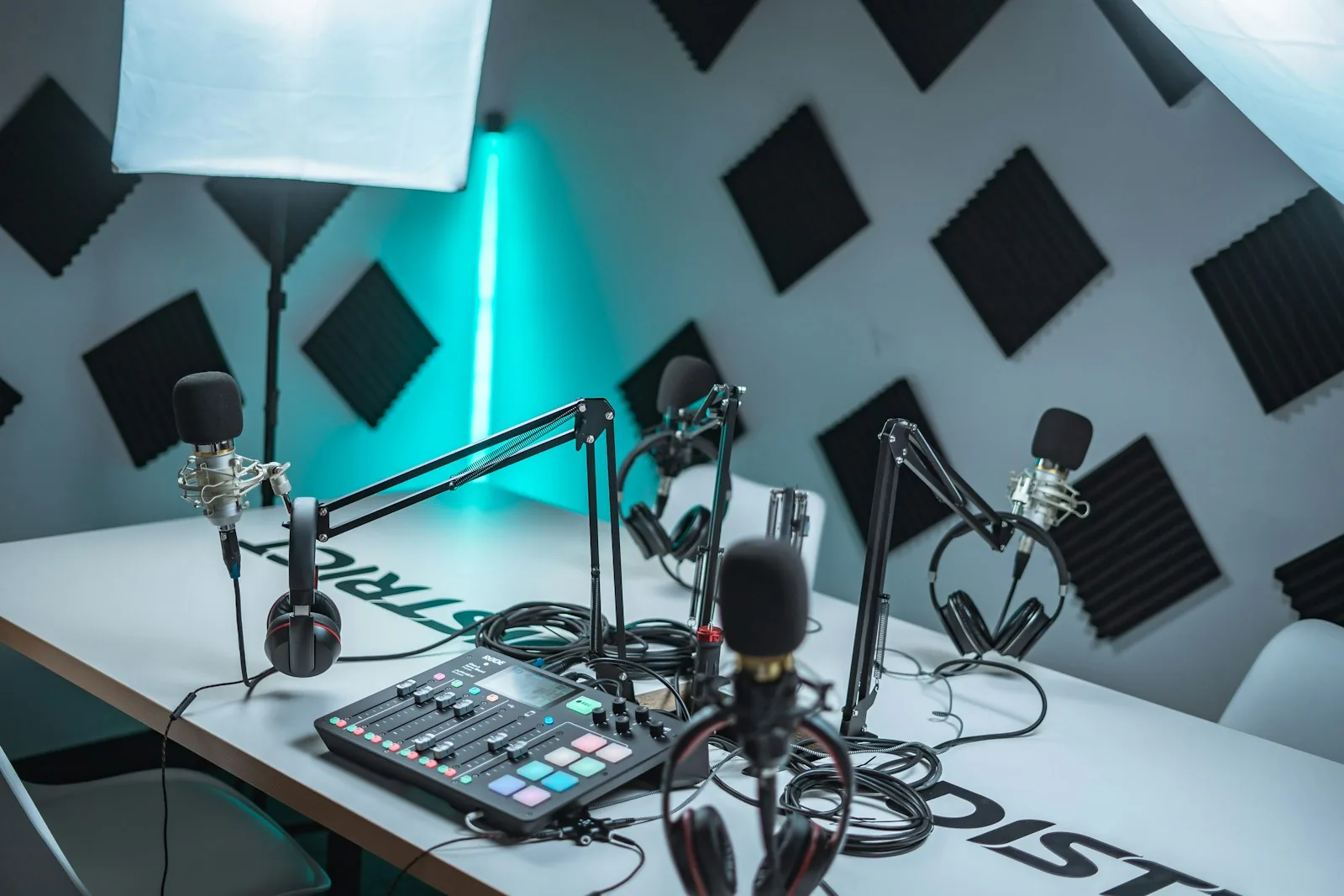
Recording studio with several microphones assigned to speakers
QUEUE / LIVE

Compatible workflows

Tools we can work with

  • CVAT logo
  • Labelbox logo
  • Roboflow logoRoboflow
  • Label Studio logo
  • Encord logo
  • Scale AI logo
  • SuperAnnotate logoSuperAnnotate
  • Darkhorse

Start smaller than the backlog

Listen for the hard cases early.

A varied sample helps define how accents, cross-talk, low volume, and environmental sound should be represented.

Pilot first

What an audio delivery contains

Time-coded text, speaker regions, event tables, and the listening guide that defined doubt. You should be able to click a label and hear the evidence.

  • Timestamped transcripts
  • Speaker regions and roles
  • Sound-event tables
  • Utterance intent labels
  • File-level classes and quality flags

Interactive example

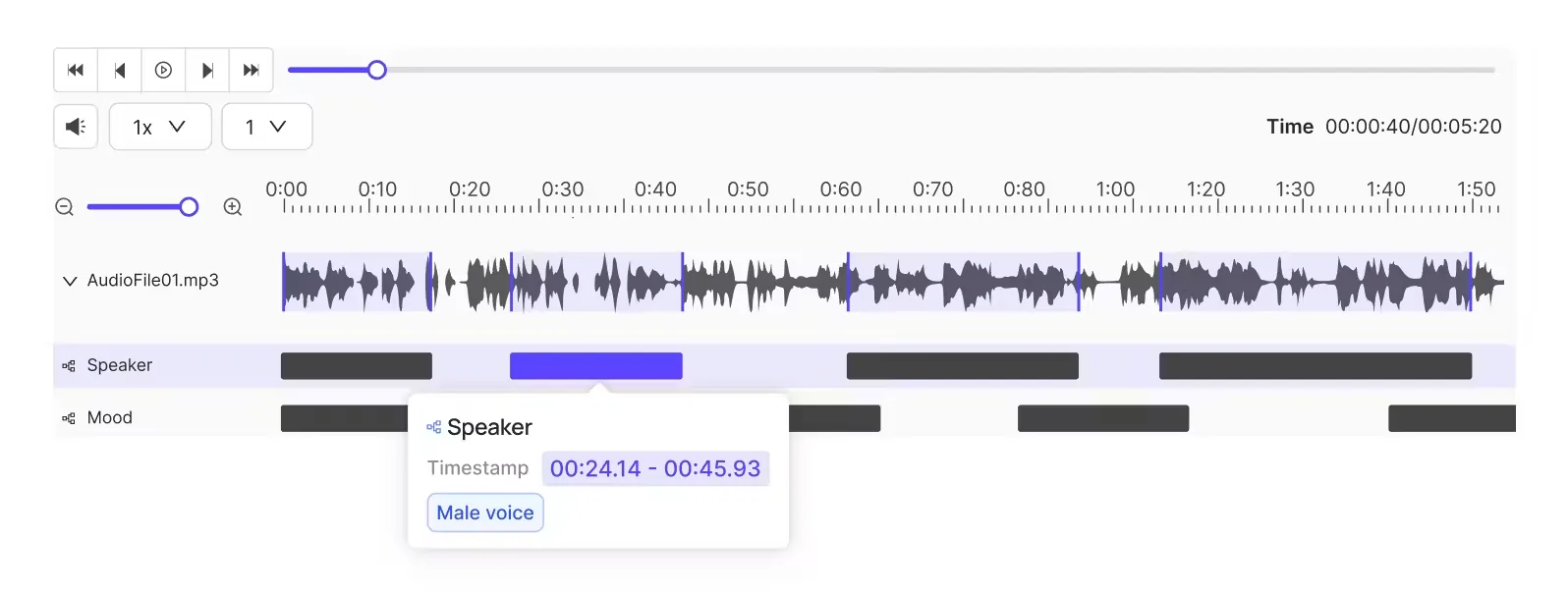
Review speakers and events in one timeline

Preview the review state and change playback speed while keeping speaker regions and event markers attached.

AUDIO / INTERVIEW_106READY
Recording studio used to demonstrate audio annotation

How an audio project is actually run

From a messy recording to a region you can hear again

Intake keeps metadata attached. Labelling ties words, speakers, and events to a clock. Review happens by ear. None of those steps is a gallery — each one is a written rule about doubt, overlap, and time.

01

Keep the collection honest before anyone transcribes
Bring the recordings in with their context audio annotation example
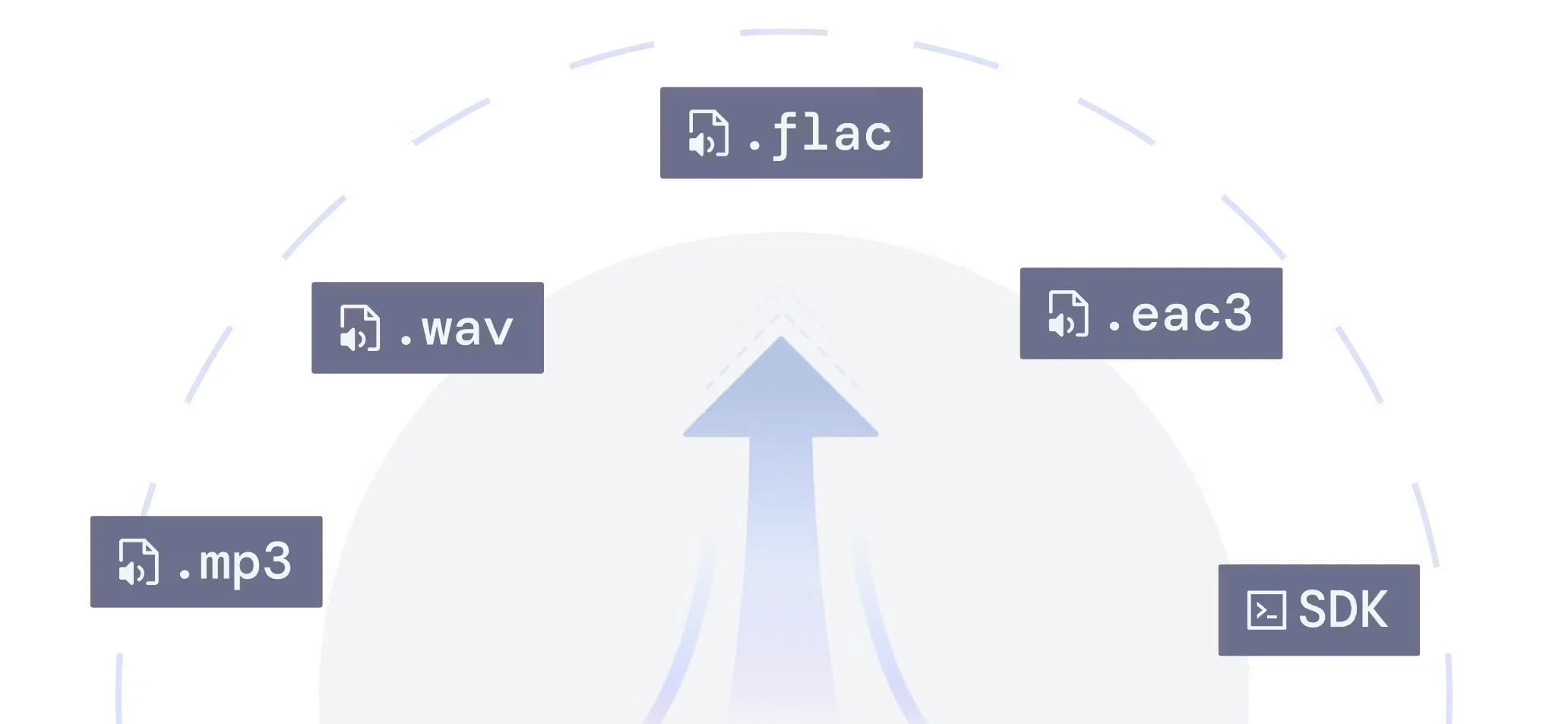
Bring the recordings in with their context

Files arrive with the metadata that will later explain a label — device, room, language, shift, or machine ID. We keep that context attached so a reviewer is not guessing why a file sounds the way it does.
Listen and mark on the same surface audio annotation example
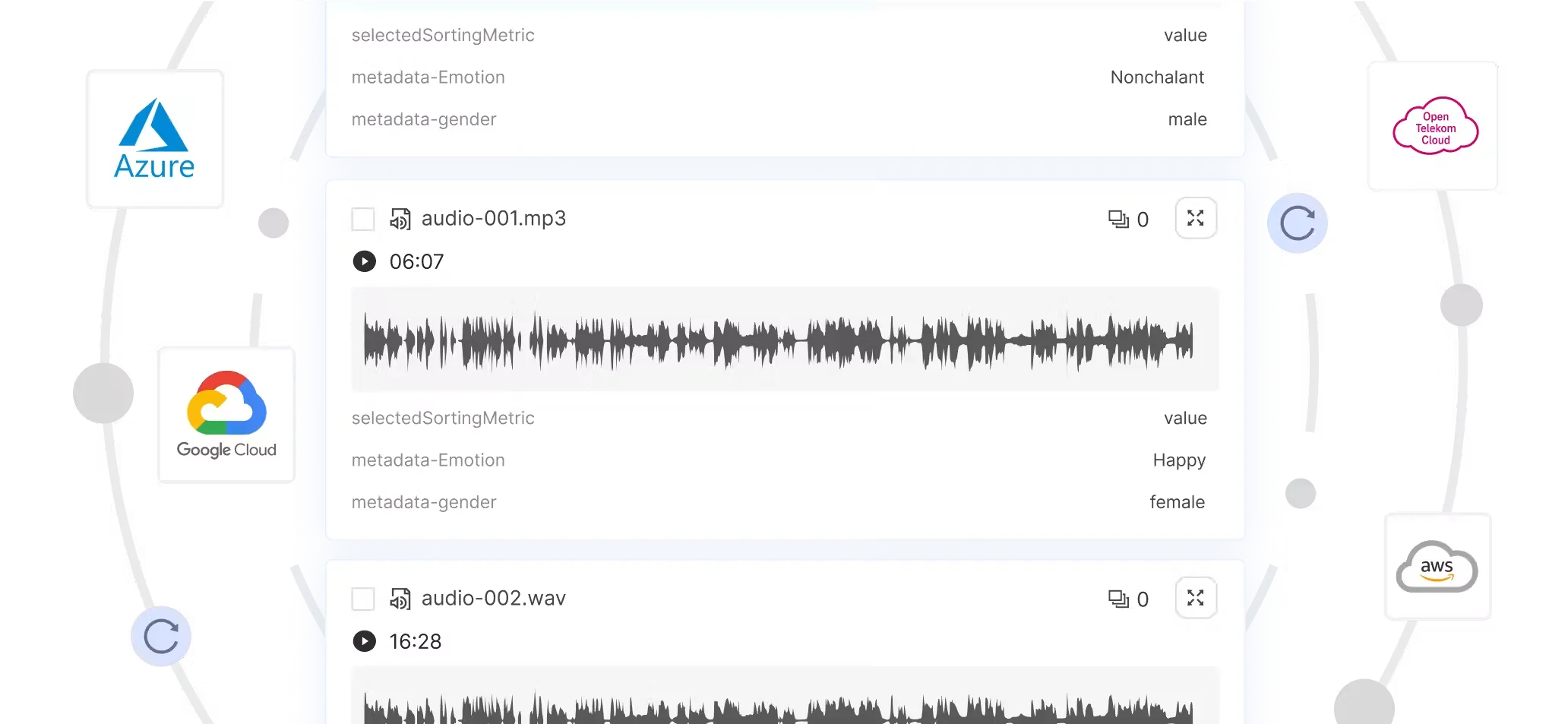
Listen and mark on the same surface

The waveform is a map, not a substitute for hearing. Annotators play the file, place regions, and write notes without exporting to a side tool that will lose the clock.
02

Label speech, speakers, and events as timed facts

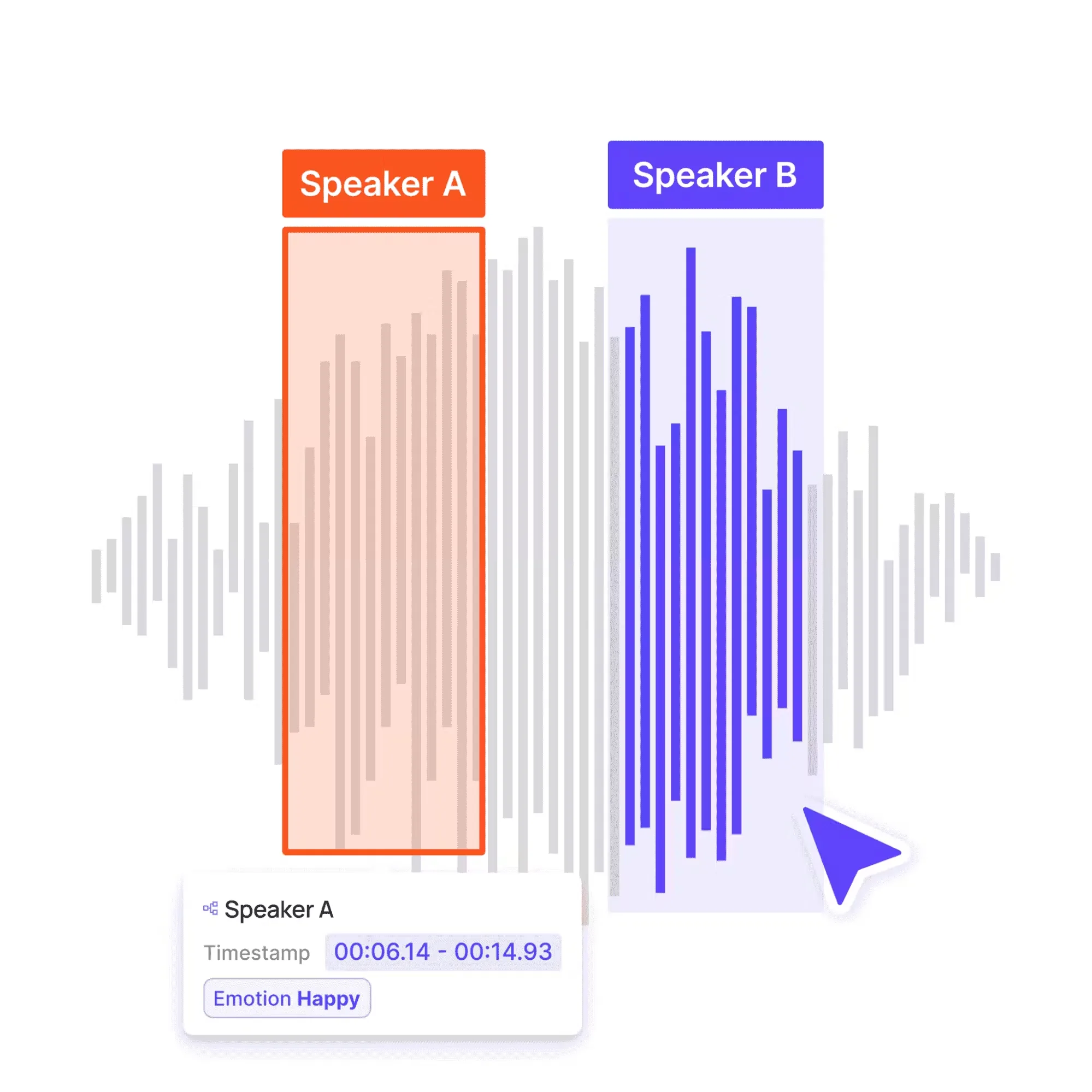
Speaker turns that survive interruption audio annotation example
Speaker turns that survive interruption

Who has the floor, including barge-in and back-channels. Overlap keeps two labels when two voices are actually there. A tidy single speaker invented for readability is rejected.

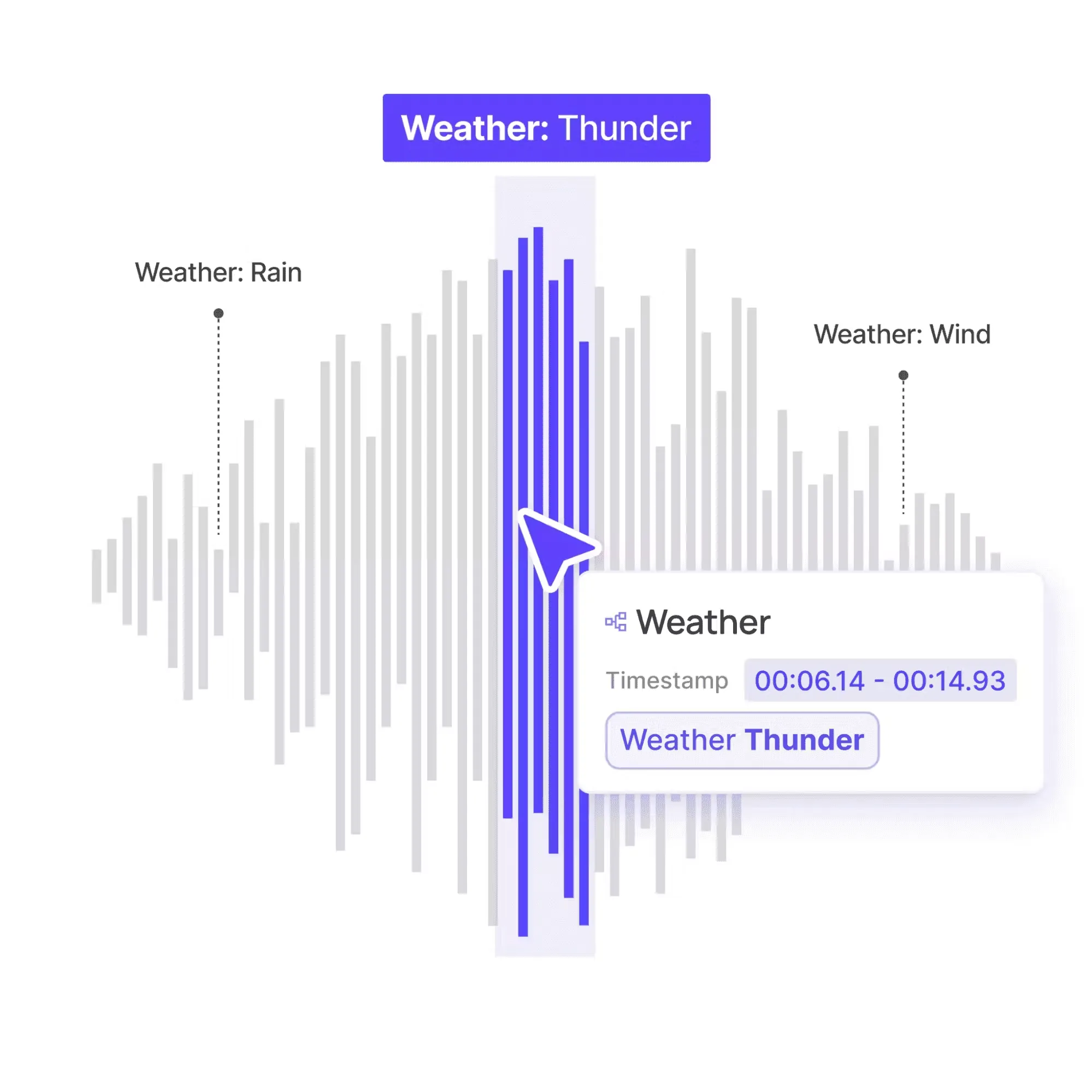
Sound events with a start and an end audio annotation example
Sound events with a start and an end

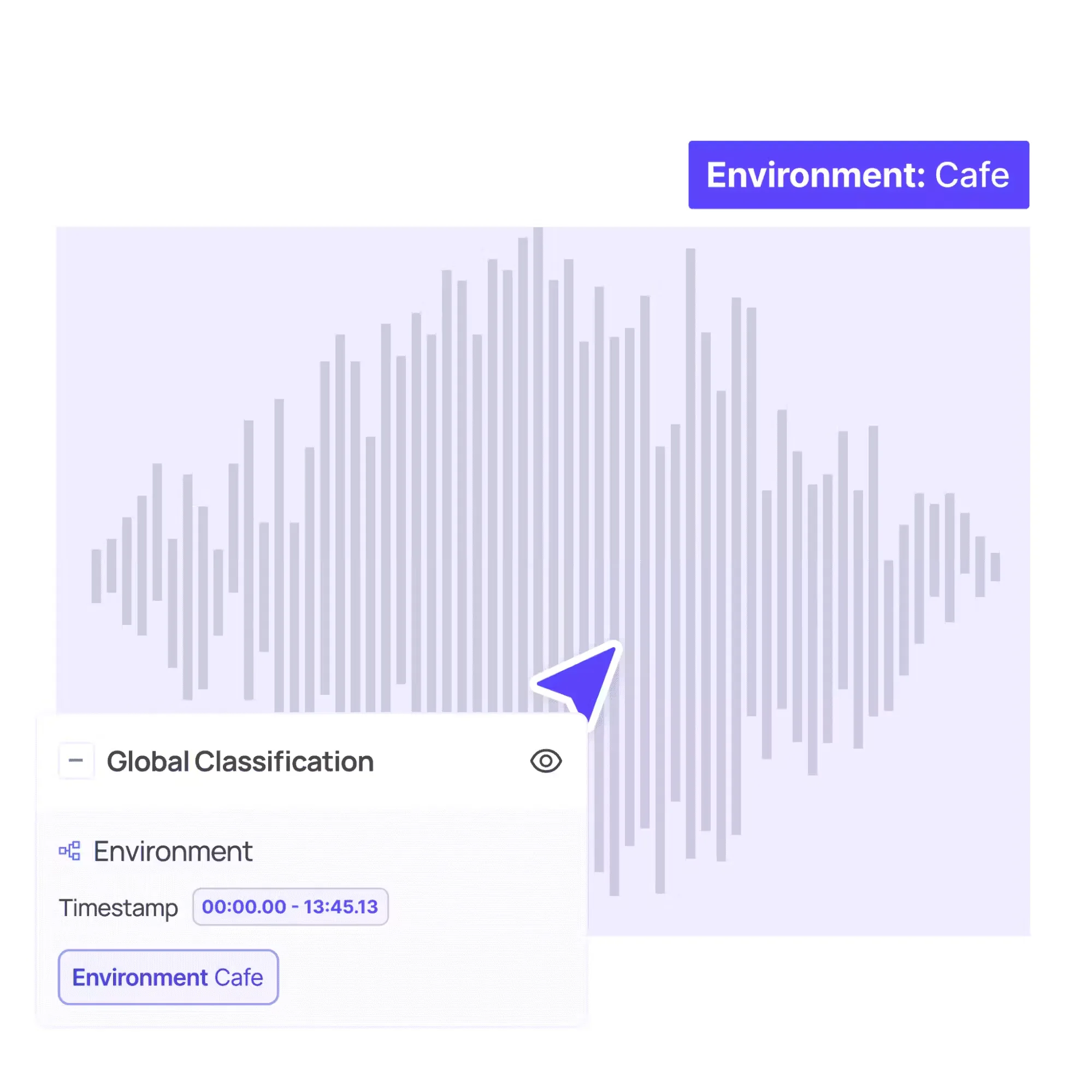
Alarms, impacts, animal calls, and machine states sit on time ranges. The model trains on the event, not on a file-level tag that pretends the sound lasted the whole recording.

File-level classes when the decision is global audio annotation example
File-level classes when the decision is global

Some questions belong to the recording as a whole — language, channel quality, whether speech is even present. Those classes are written once and inherited, not restated on every utterance.

03

Review at the tempo the recording deserves

Spend time on the files that will argue audio annotation example
Spend time on the files that will argue

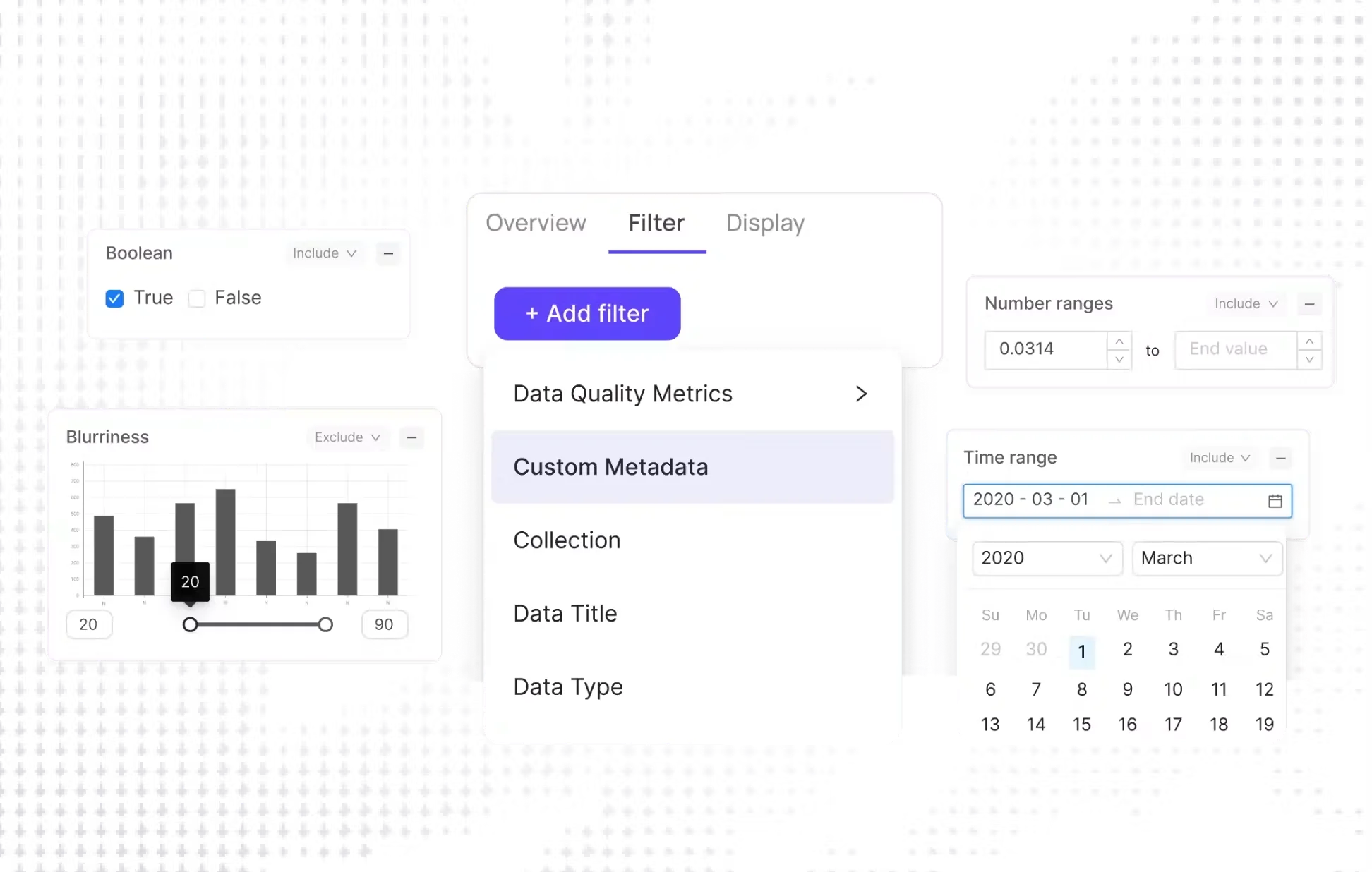
We slice the set by noise, duration, language, and the metadata you attach, so calibration is not wasted on an hour of clean studio speech that will never appear in production.

Review at a speed the ear can defend audio annotation example
Review at a speed the ear can defend

Playback speed and skip interval are review tools. Dense overlap is walked slowly. Long silence is not labelled at the same tempo as a stacked argument.

Quality on this modality

Audio quality is a region you can hear again.

We replay the contested second. If the text, the speaker, or the event cannot be defended from the recording, it is flagged or rewritten. A silent confidence score does not leave this studio.

Time alignment

Words and events sit on ranges a second listener can find. Systematic drift is treated as a batch defect, not as taste.

Overlap policy

Cross-talk follows the written rule every time. Invented single-speaker fiction is rejected even when it reads more nicely.

Uncertainty marks

Inaudible and guessed content is visible in the export. Reviewers look for sudden perfect sentences in noisy rooms.

Event vs speech

A bang, a chime, or a cry is not smuggled into the transcript as a word unless the guide says to lexicalise it.

Audio Annotation

Where sound becomes training data

Four places this work earns its keep. Read them as scenes, not as a pile of chips.

  1. 01Voice interfaces and assistants
  2. 02Call and conversation intelligence
  3. 03Acoustic monitoring
  4. 04Speech recognition training
  1. Voice interfaces and assistants

    Short commands, wake words, and the messy follow-up that happens after the demo script. Timing and speaker matter because the product has to know when it was addressed.

  2. Call and conversation intelligence

    Turns, intent, and entities on real support or sales audio. We label the conversation that occurred, including interruptions, not the conversation someone wished had occurred.

  3. Acoustic monitoring

    Industrial, environmental, or safety sounds that are events first and language second. The clock and the class are the product; a prose description is optional.

  4. Speech recognition training

    Diverse speakers, devices, and rooms, transcribed to a written standard so a model is not punished for a style one annotator invented on a Tuesday.

Questions that belong only here

Ask these before this work scales.

01

Overlap, noise, and uncertainty get written rules before scale. Regions that still cannot be decided are flagged. We will not manufacture a clean sentence over a ruined take just to fill a cell.

02

Yes, when the audio supports it. Overlapping regions keep separate speaker labels. If the mix is inseparable, that fact is recorded instead of assigning the louder voice by habit.

03

Yes. Alignment, correction, segmentation, and enrichment are common. A supplied transcript is a draft until it matches the audio and the guide.

04

Yes, when the ontology names the events. Sirens, impacts, animals, machine states, and silence can all be first-class labels with start and end times.

05

We staff and review against the languages in the brief. An accent is not an error. The error is a listener who 'corrects' speech into a more familiar form.

06

A set that includes a clean take, a noisy take, an overlap, and one file whose useful signal is not speech. That quartet tells us whether the guide is ready to run for hours.

Who spoke when

Multi-speaker diarization

Diarization splits a recording into speaker turns and says who is speaking in each. Speech models, meeting tools and call analytics all depend on these turns being consistent.

Speaker turns

A turn starts at the first audible sound of a speaker's utterance and ends at its last. The guideline sets the shortest pause that splits one speaker's speech into two turns, and how to handle backchannels like 'mm-hm' — as their own short turns, or as tags inside the other speaker's turn.

Overlapping speech

When people talk over each other, each speaker gets their own segment, and the segments are allowed to overlap in time. Overlap is never resolved by giving the time to whoever is louder. Where overlapped words can't be made out, the region is tagged as overlapping and unintelligible rather than guessed.

Speaker labels and long-recording consistency

Speakers get anonymous labels such as S1 and S2, or roles such as agent and customer when the schema asks for them. On long recordings, speaker identity tends to drift. Annotators keep a speaker sheet with short reference clips for each label, and a reviewer checks label consistency across the whole file, not just within each segment, before delivery.

New to the process? Read how data annotation works.

Transcription style

Verbatim versus clean-verbatim transcription

The same audio can produce very different transcripts. Picking the style is a decision about what your model should learn.

Verbatim rules

Full verbatim keeps everything spoken: fillers such as 'uh' and 'um', false starts, repetitions, self-corrections and stutters, using spellings fixed in the guideline. Non-speech sounds are written as bracketed tags from a closed list, such as [laugh], [cough], [noise] and [music], and unclear words as [inaudible] or a marked best guess.

Clean-verbatim rules

Clean verbatim removes fillers, false starts and stutters but keeps every meaningful word and the speaker's own grammar. Nothing is paraphrased. Clean verbatim suits readable transcripts and many language-model uses. Full verbatim suits acoustic and speech recognition training, where the model has to learn what people actually say.

Sound level

Phonetic transcription

Some projects need what was pronounced, not just which words were said: pronunciation lexicons, accent research, speech synthesis and low-resource languages.

Phoneme sets

We work in IPA or in a project-specific phoneme set, such as an ARPAbet-style inventory or your own lexicon symbols. The inventory, stress markers and syllable boundary symbols are fixed before work begins, so every annotator uses the same notation.

Variants and accents

Annotators transcribe the pronunciation actually heard, not the dictionary form. Common variants and accent-specific realisations are listed in the guideline with audio examples. Phonetic work is assigned to annotators with the relevant language background and checked against the agreed inventory.

Beyond speech

Acoustic event tagging

Sound event labels teach models to recognise what is happening in a recording: alarms, glass breaking, machinery faults, vehicle sounds, or animal calls.

Event taxonomy

The taxonomy is hierarchical, for example vehicle, then horn, siren or engine, with written definitions and reference clips for each class. Where a sound could fit two classes, the guideline says which wins, or whether a less specific parent label should be used.

Onset, offset and overlap

Each event gets an onset and offset timestamp at the first and last audible moment. Repeating sounds, such as a dog barking several times, are labelled either as separate events or as one event, according to a written gap rule. Events that overlap in time are labelled separately, never merged.

Background noise levels

Each file or segment can carry a background condition label, such as clean, moderate or heavy noise, plus the noise type (traffic, crowd, wind). This lets your team filter training data or measure model performance by condition.

Time

Timestamp precision and segmentation

How audio is cut into segments affects both training and how the transcript can be used afterwards.

Segmentation rules

Segments follow natural pauses and stay within a maximum length agreed for your pipeline. The guideline sets the timestamp precision required, whether word-level timings are needed, and where boundaries go: at the start and end of audible speech, not at the edges of surrounding silence.

Measurement

How word error rate (WER) is measured

WER compares a transcript with a reference transcript of the same audio. Our audited quality target is WER below 2% on calibrated samples. It is a target we measure and report against, not a guarantee.

Substitutions, deletions and insertions

The transcript is aligned word by word against the reference. A substitution is a wrong word in place of the right one, a deletion is a reference word that is missing, and an insertion is an extra word that wasn't spoken. WER is the total of all three divided by the number of words in the reference.

Normalisation before scoring

Both texts are normalised the same way before scoring: case, punctuation, number formats ('twenty' or '20'), agreed spelling variants, and whether fillers and non-speech tags are counted. These rules are written down with the target, because the same transcript can produce very different WER under different normalisation.

Why measured quality matters to models: why training data quality matters.

Languages

Multilingual and code-switched audio

Many real recordings mix languages, sometimes within a single sentence.

Code-switching rules

Each segment or word carries a language tag. Switched words are written in their own language's standard script or in an agreed romanisation, according to the guideline. Loanwords that have become part of the main language are listed so they aren't tagged as switches. Annotators are assigned by language pair, and reviewers check both languages.

Quality control

QA stages and adjudication

Every project starts with a calibration pilot, runs on written rules and goes through two-stage review.

Two-stage review

Annotators replay and self-check every segment before submitting. An independent reviewer then audits a sample of each batch by listening, not just reading. They check words, speaker labels, tags and timestamps, and score WER against the reference on calibrated samples. Disagreements are adjudicated, the reason is recorded, and recurring cases update the guideline.

Delivery

Delivery formats

Audio labels are delivered in the format your training pipeline reads.

Common formats

JSON or JSONL transcripts with segment and optional word timings and speaker labels; RTTM files for diarization; subtitle formats such as SRT or WebVTT; Praat TextGrid for phonetic work; and JSON or CSV event lists with onset, offset and class. Schemas are agreed in the pilot and tested against your loader.

Inspect Sample Deliverable & QA Rubric

Illustrative sample
{
  "info": "Illustrative sample — not client data",
  "audio_id": "call_0031",
  "style": "verbatim",
  "segments": [
    { "speaker": "S1", "start": 0.48, "end": 3.12,
      "text": "Hi, uh, I'm calling about my- my last order." },
    { "speaker": "S2", "start": 2.95, "end": 4.40,
      "text": "Sure, [noise] can I take the order number?" }
  ]
}

Stage 1 — Annotator self-check

  • Every segment replayed before submission
  • Style rules followed: verbatim or clean-verbatim
  • Speaker labels and overlaps marked
  • Onsets, offsets and tags from the closed list

Stage 2 — Independent reviewer audit

  • Independent reviewer audits samples by listening
  • WER scored on calibrated samples after normalisation
  • Speaker consistency checked across the full file
  • Disagreements adjudicated; failed batches reworked

Audio annotation technical FAQ

How is speaker identity kept consistent across a long recording?

Annotators keep a speaker sheet with short reference clips for each label and check new turns against it. A reviewer then checks label consistency across the whole file, not just within segments, so S1 at the start is still S1 an hour later.

How is WER calculated and what does the under-2% target mean?

The transcript is aligned with a reference, and substitutions, deletions and insertions are added up and divided by the reference word count. Both texts are normalised the same way first. WER below 2% is an audited quality target on calibrated samples, not a guarantee.

Should we choose verbatim or clean-verbatim transcription?

Choose full verbatim, which keeps fillers, false starts and non-speech tags, when training speech recognition or acoustic models that must handle real speech. Choose clean verbatim when transcripts will be read by people or used as text data. Both keep every meaningful word, and neither paraphrases.

How is overlapping speech handled in diarization?

Each speaker gets their own segment, and segments may overlap in time. Overlap is never given to whoever is louder. Overlapped words that can't be made out are tagged as unintelligible rather than guessed.

How do you transcribe code-switched audio?

Each segment or word carries a language tag. Switched words follow the agreed script or romanisation, and established loanwords are listed so they aren't tagged as switches. Annotators and reviewers are assigned by language pair.

Test us on your hardest recordings first.

Start with a Free Calibration Pilot

Start a conversation

Send the recording you almost skipped.

Overlap, a swallowed word, a sound that is not speech. That file writes the listening guide. Clean studio audio will not.

Request a Quote