


Industries

The right label depends on the world it comes from.

Domain context changes the edge cases, review questions, and meaning behind every label.

Coverage / 10 domainsReview / Human verified

Compatible workflows

Tools we can work with

  • CVAT logo
  • Labelbox logo
  • Roboflow logoRoboflow
  • Label Studio logo
  • Encord logo
  • Scale AI logo
  • SuperAnnotate logoSuperAnnotate
  • Darkhorse

The edge-case desk

The detail that changes the label.

A road user hidden from view. A reflection mistaken for a defect. Good annotation starts with the decisions a dataset cannot leave to chance.

Automotive / Review focus01 — 10
Automotive annotation example
The edge case

When a road user disappears behind another.

Is this the same object when it returns?

What the annotation guide needs to settle

Keep identity tied to the track. Mark visibility and occlusion separately, using the agreed rules for reappearance.

Domain annotation

Professional data annotation for every industry

Each domain keeps one wide view of the work, then the use cases those labels have to support.

01

Automotive

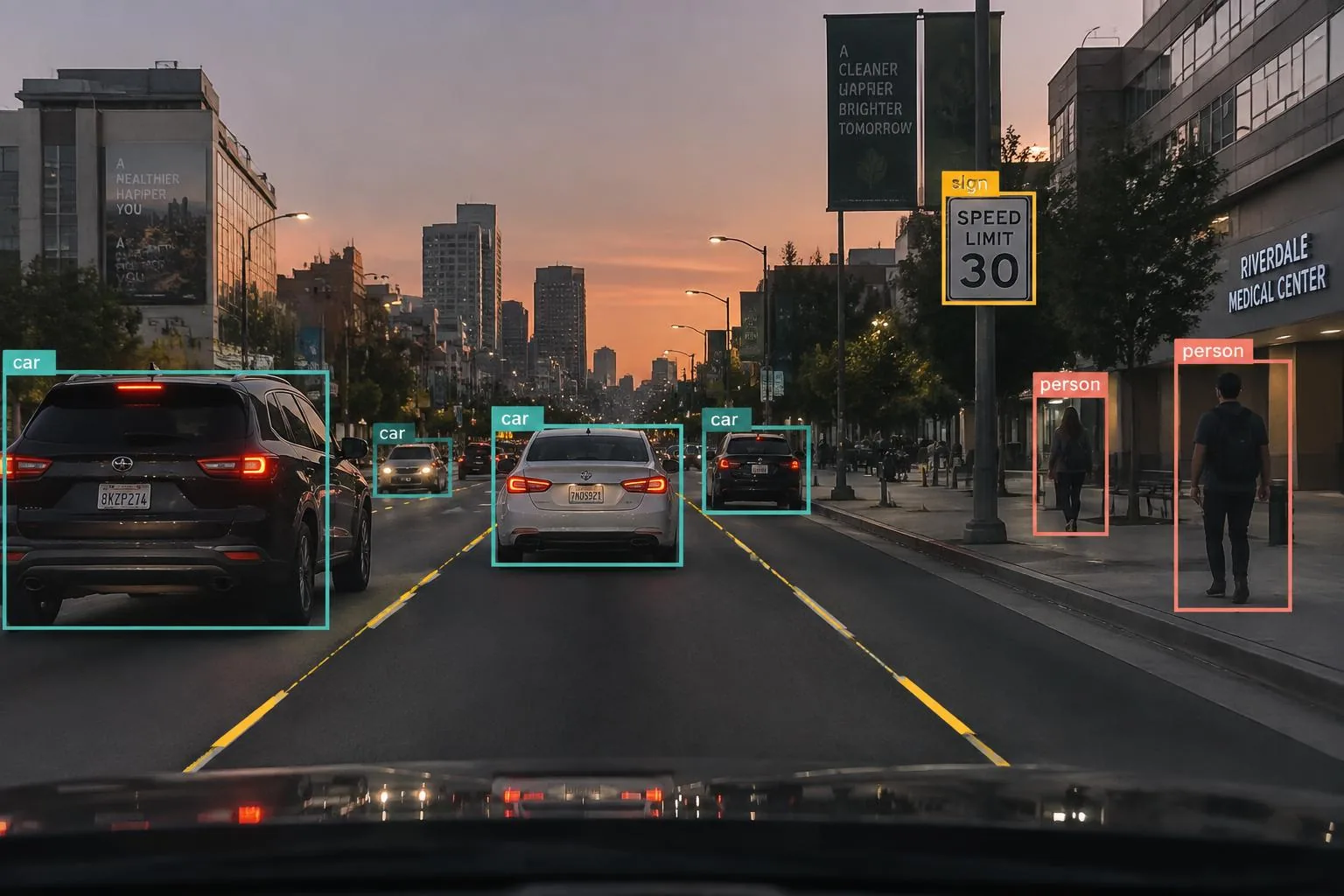
Automotive data annotation example: boxes, lanes, tracks

Road scenes need labels that stay consistent when vehicles, people, and lanes overlap, disappear, and reappear.

  • Vehicle and pedestrian detection
  • Lane and road-marking annotation
  • Traffic sign and signal classes
  • Occlusion and truncation rules
  • Multi-camera tracking

Explore automotive annotation in depth

02

Aerial

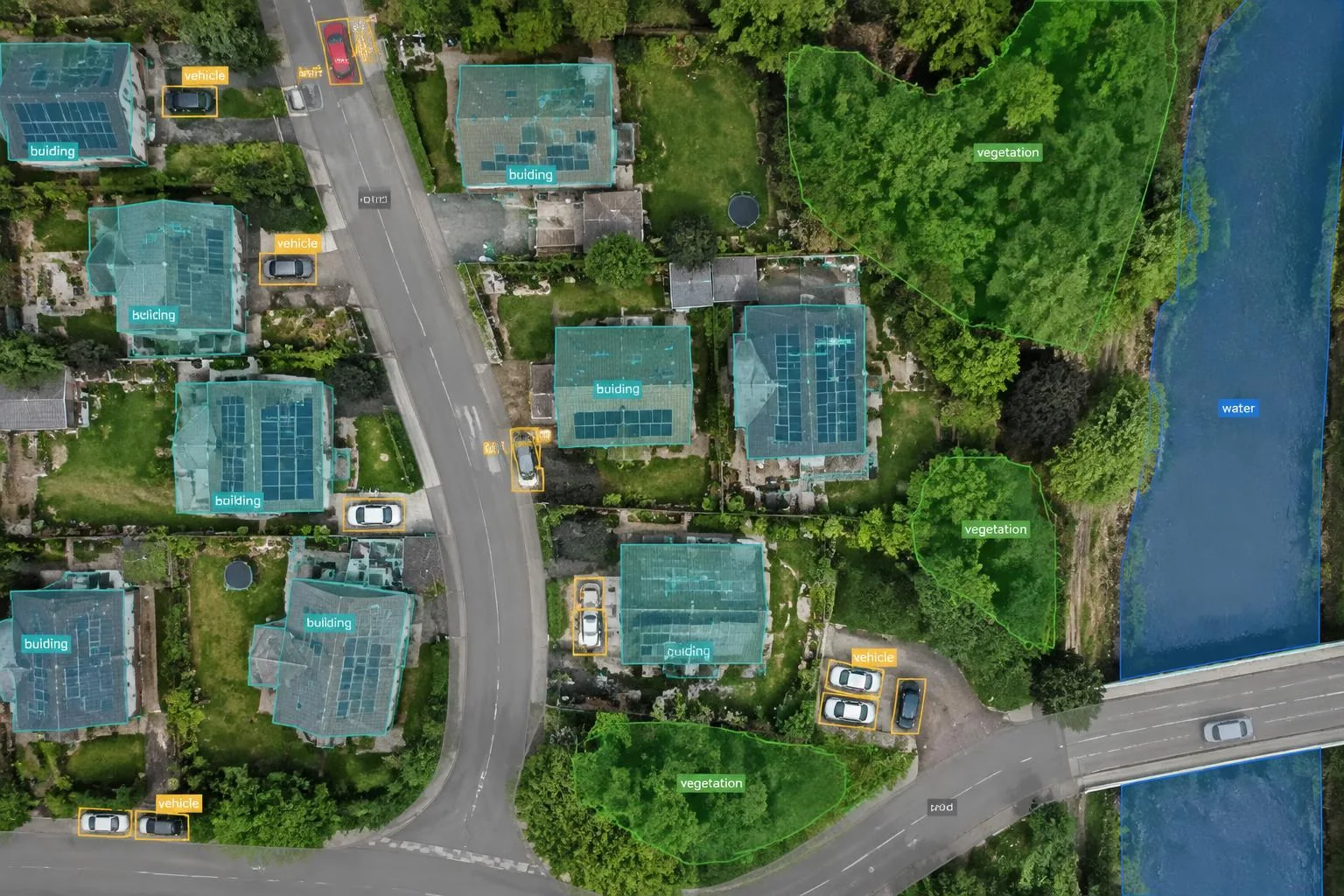
Aerial data annotation example: regions, objects, change

Overhead and satellite views train models to recognize objects in environments that change with altitude, light, and season.

  • Drone applications
  • Satellite image annotation
  • Change detection from image differences
  • Infrastructure inspection
  • Equipment tracking
  • Property monitoring
  • Road traffic reporting
  • Pipeline monitoring

Explore aerial annotation in depth

03

Agriculture

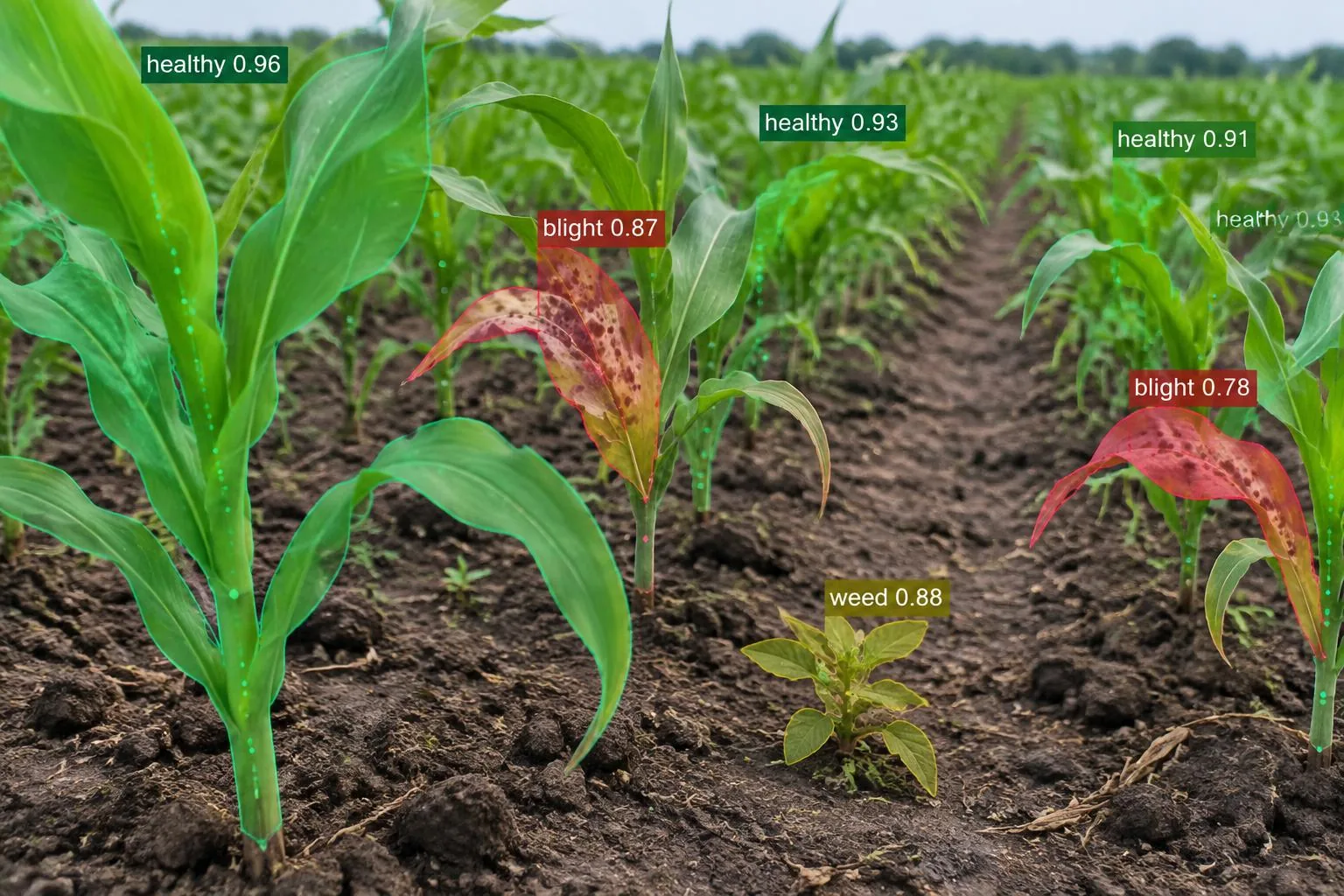
Agriculture data annotation example: masks, classes, keypoints

Field imagery is labeled so a model can tell crop, soil, growth stage, and damage apart across a changing season.

  • Crop and weed segmentation
  • Growth-stage classification
  • Disease and stress regions
  • Livestock and equipment detection
  • Field-boundary mapping
04

Documents

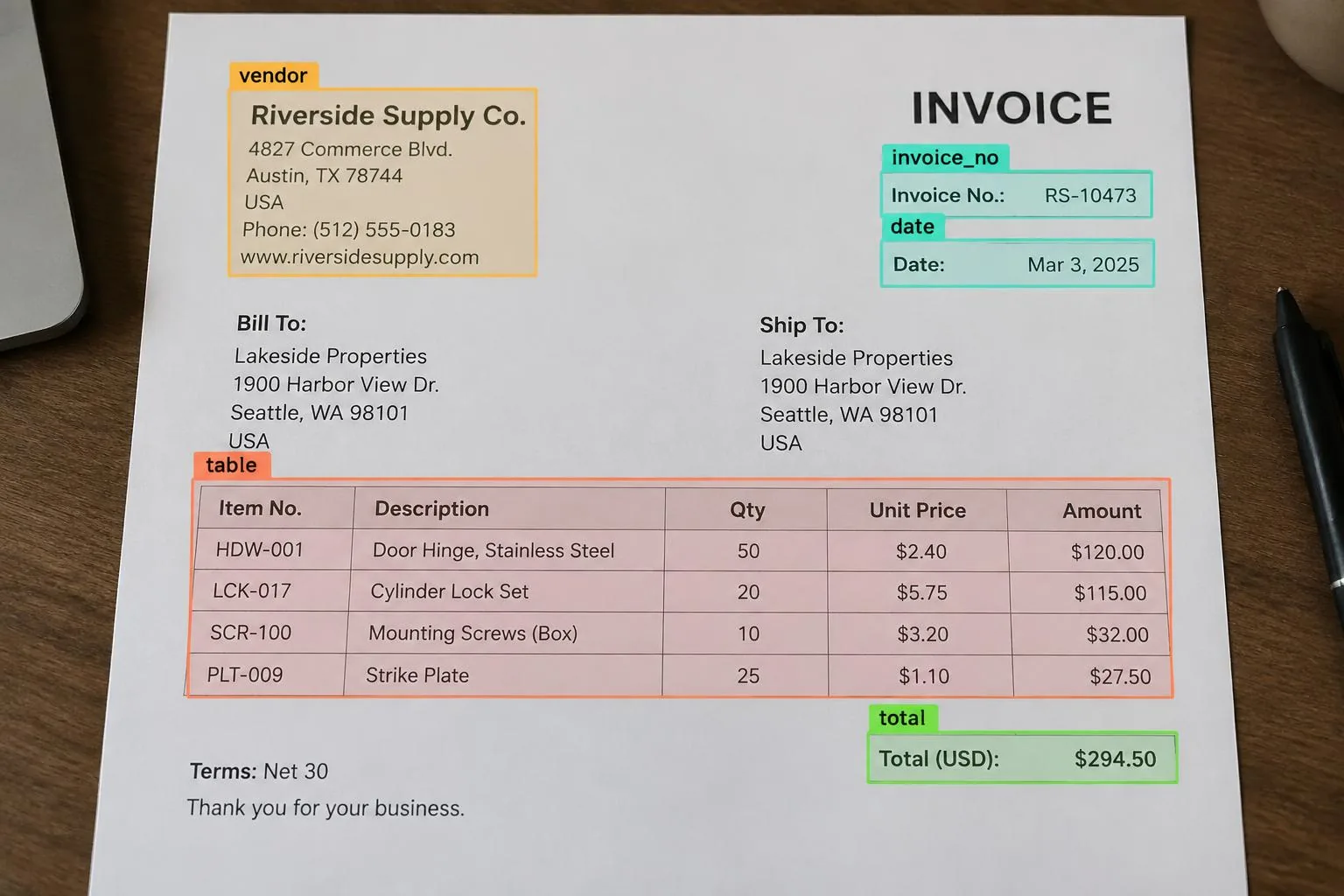
Documents data annotation example: fields, entities, layout

Pages are marked so fields, tables, and reading order survive the move from paper into structured data.

  • Invoice and form fields
  • Tables and line items
  • Handwriting and stamps
  • Newspaper and magazine layout
  • Archive digitization

Explore documents annotation in depth

05

Manufacturing

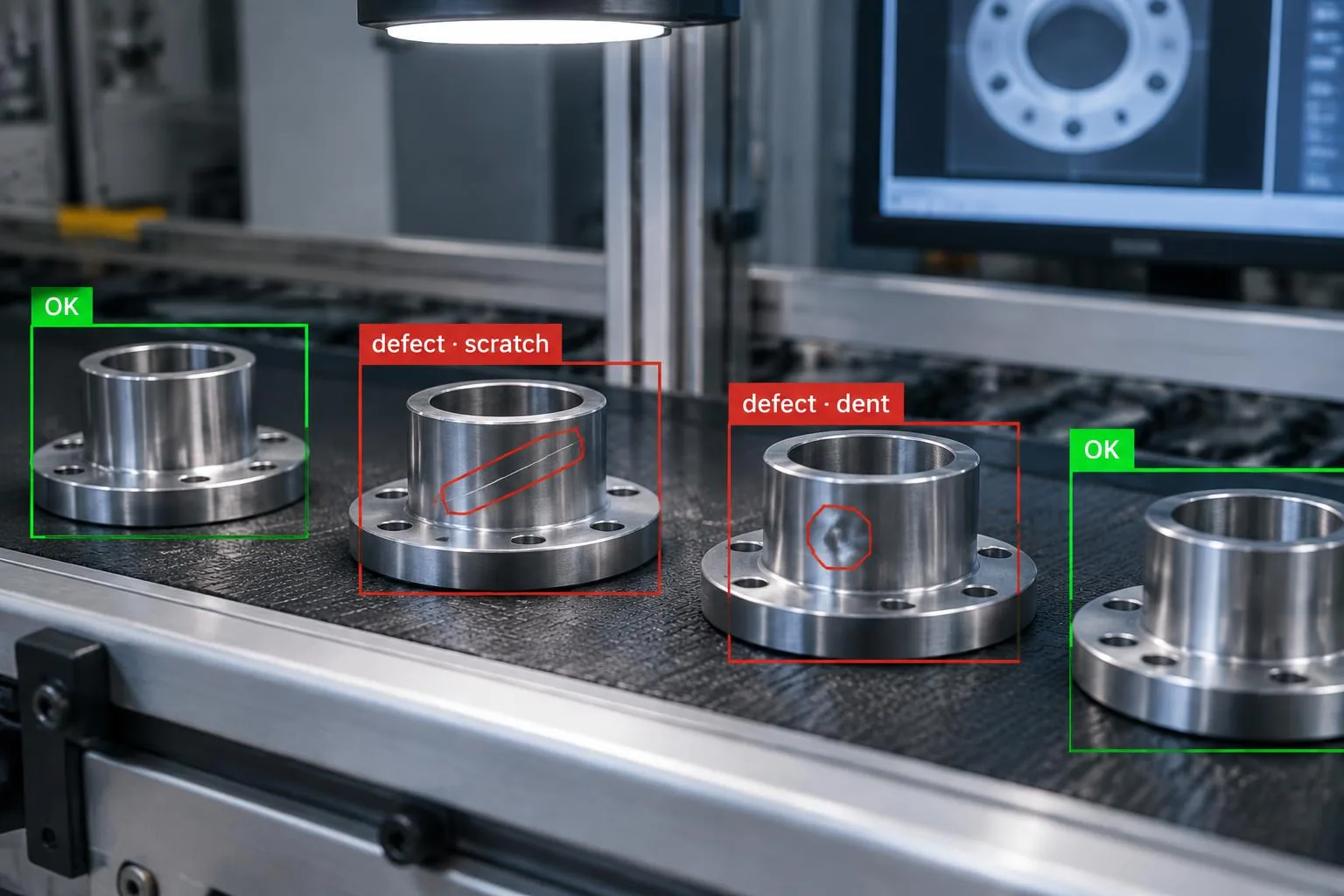
Manufacturing data annotation example: defects, parts, events

Production images are labeled tightly enough to separate a good part, a defect, and the step where the fault appears.

  • Defect detection
  • Assembly verification
  • Part and tool classification
  • Surface and edge inspection
  • Production-event labeling

Explore manufacturing annotation in depth

06

Medical

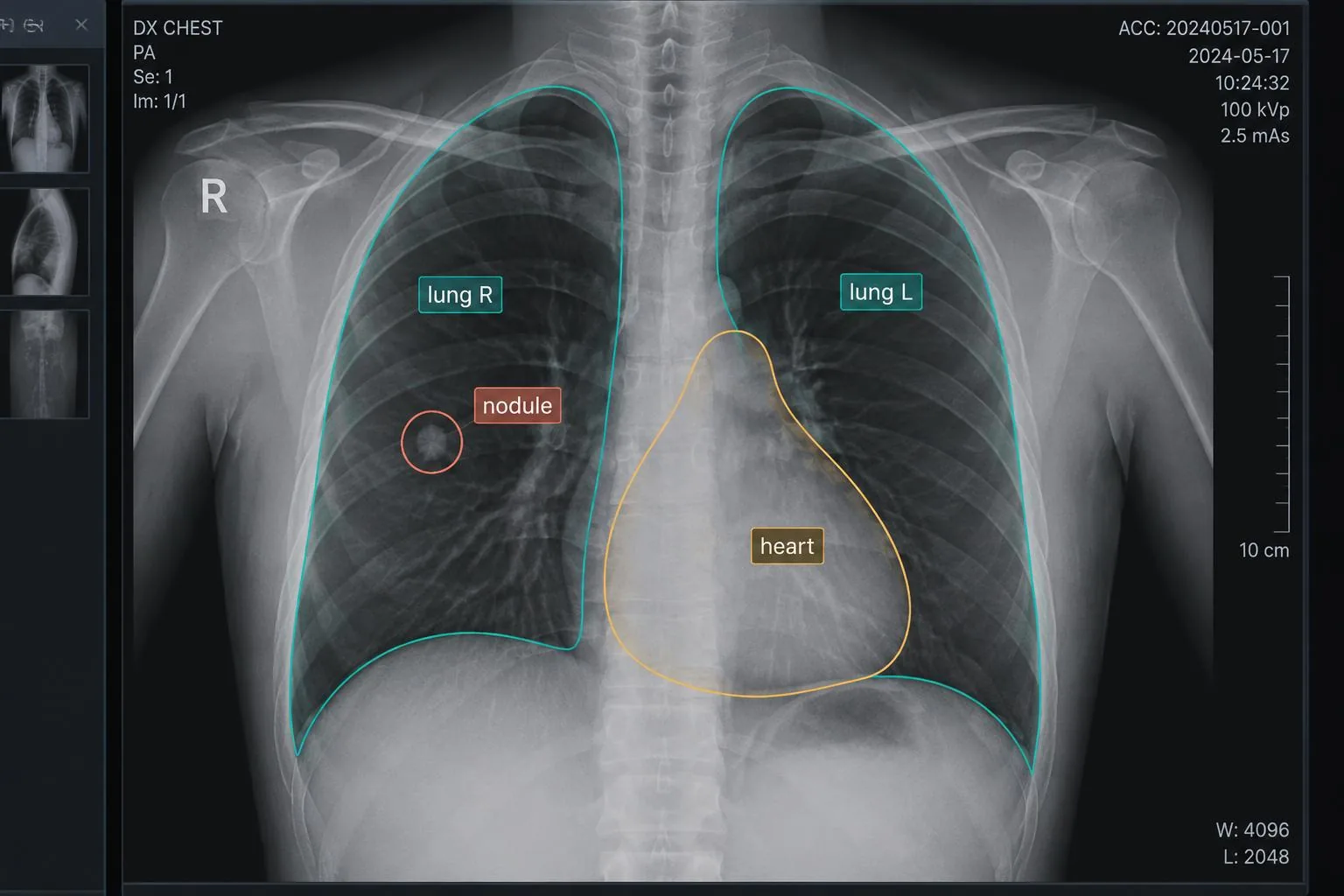
Medical data annotation example: regions, entities, classes

Approved clinical images and documents are labeled so anatomy, findings, and fields stay tied to the source.

  • Anatomy and region markup
  • Finding and measurement classes
  • Clinical document fields
  • Sequence and slice context
  • Review flags for uncertain cases

Explore medical annotation in depth

07

Sport

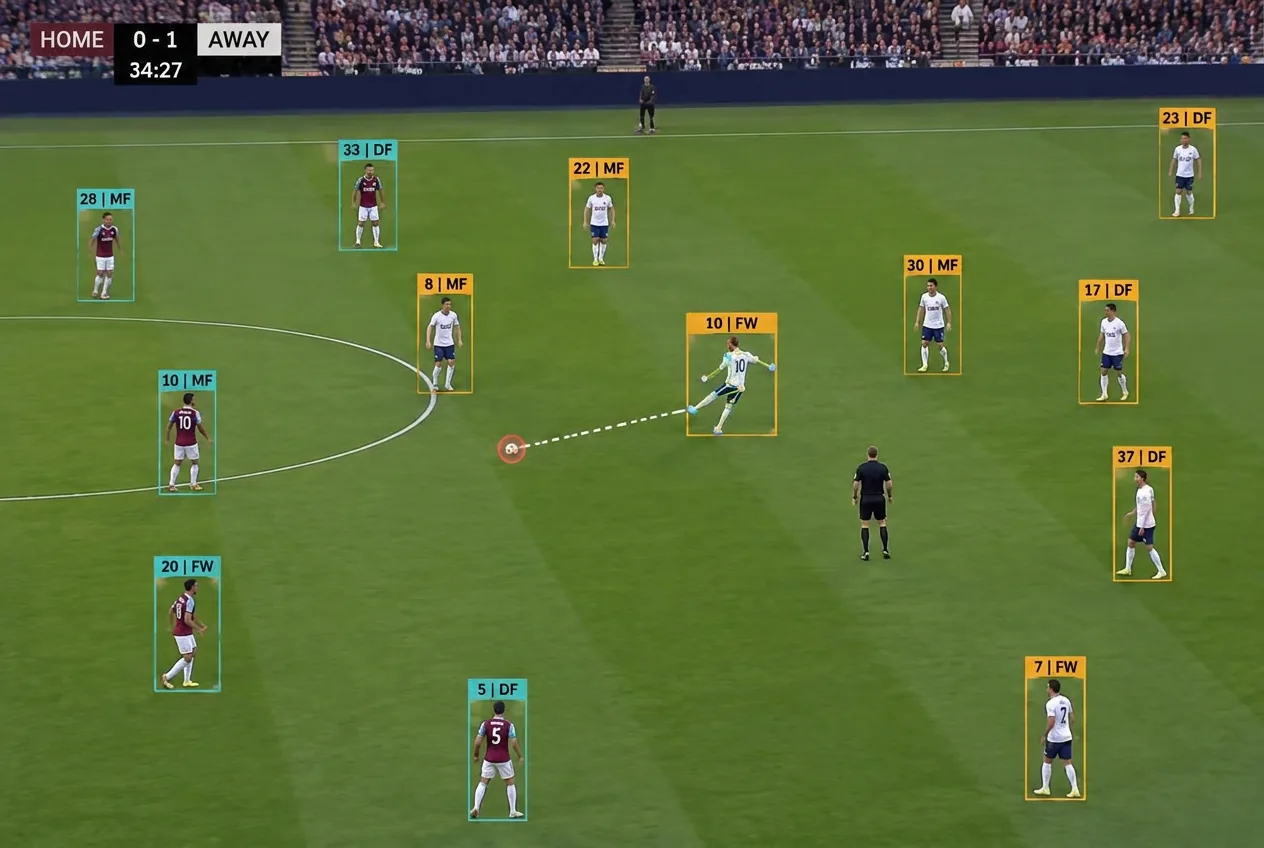
Sport data annotation example: tracks, poses, events

Match footage is labeled so players, the ball, and the action stay connected from one frame to the next.

  • Player and ball tracking
  • Pose and action labels
  • Event start and end points
  • Team and role attributes
  • Broadcast and tactical views

Explore sport annotation in depth

08

Waste management

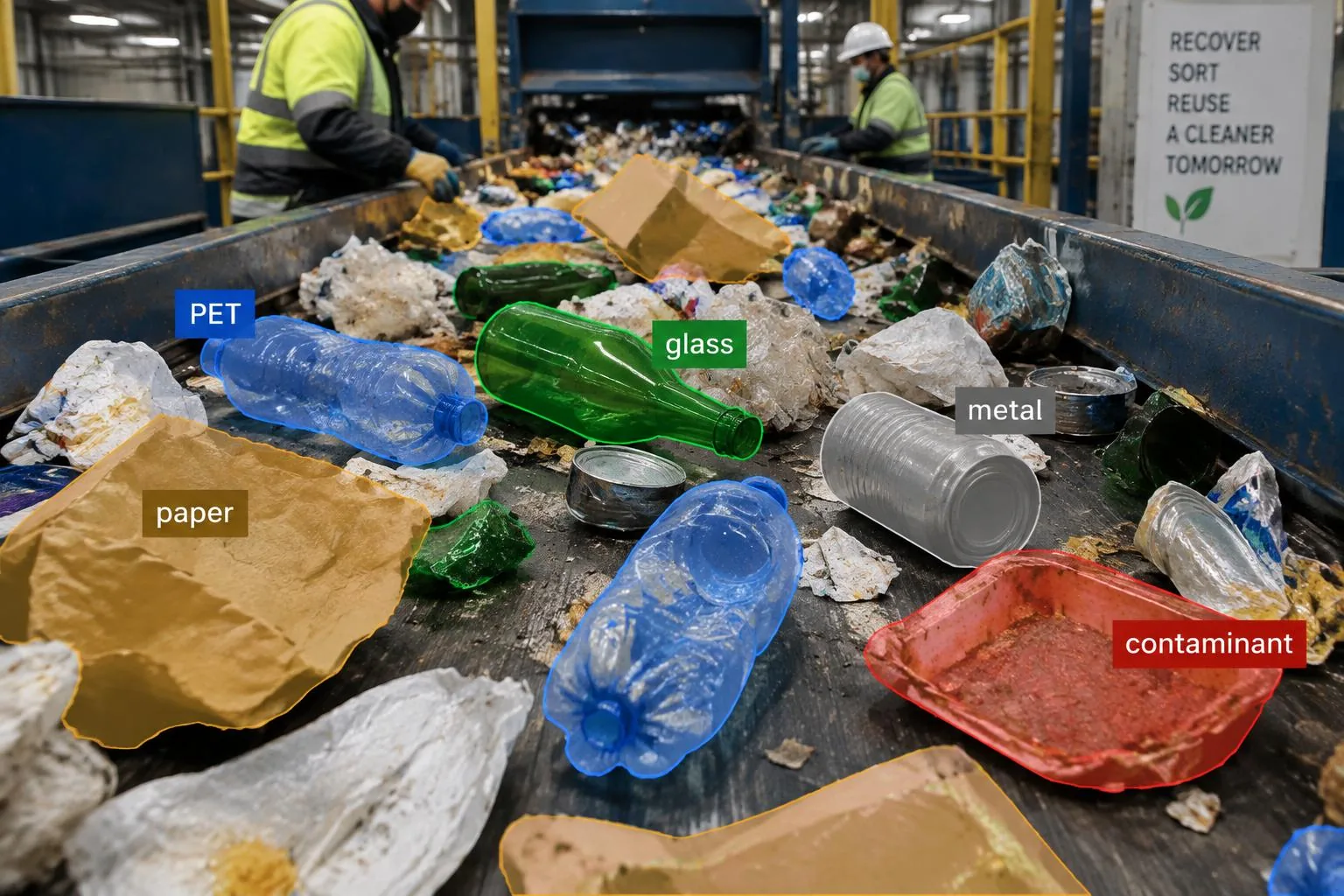
Waste management data annotation example: classes, masks, objects

Sorting scenes are labeled so materials, bins, and contamination can be separated before a model acts on them.

  • Material classification
  • Bin and container detection
  • Contamination regions
  • Conveyor and sorting events
  • Collection-route imagery
09

LiDAR & 3D Annotation

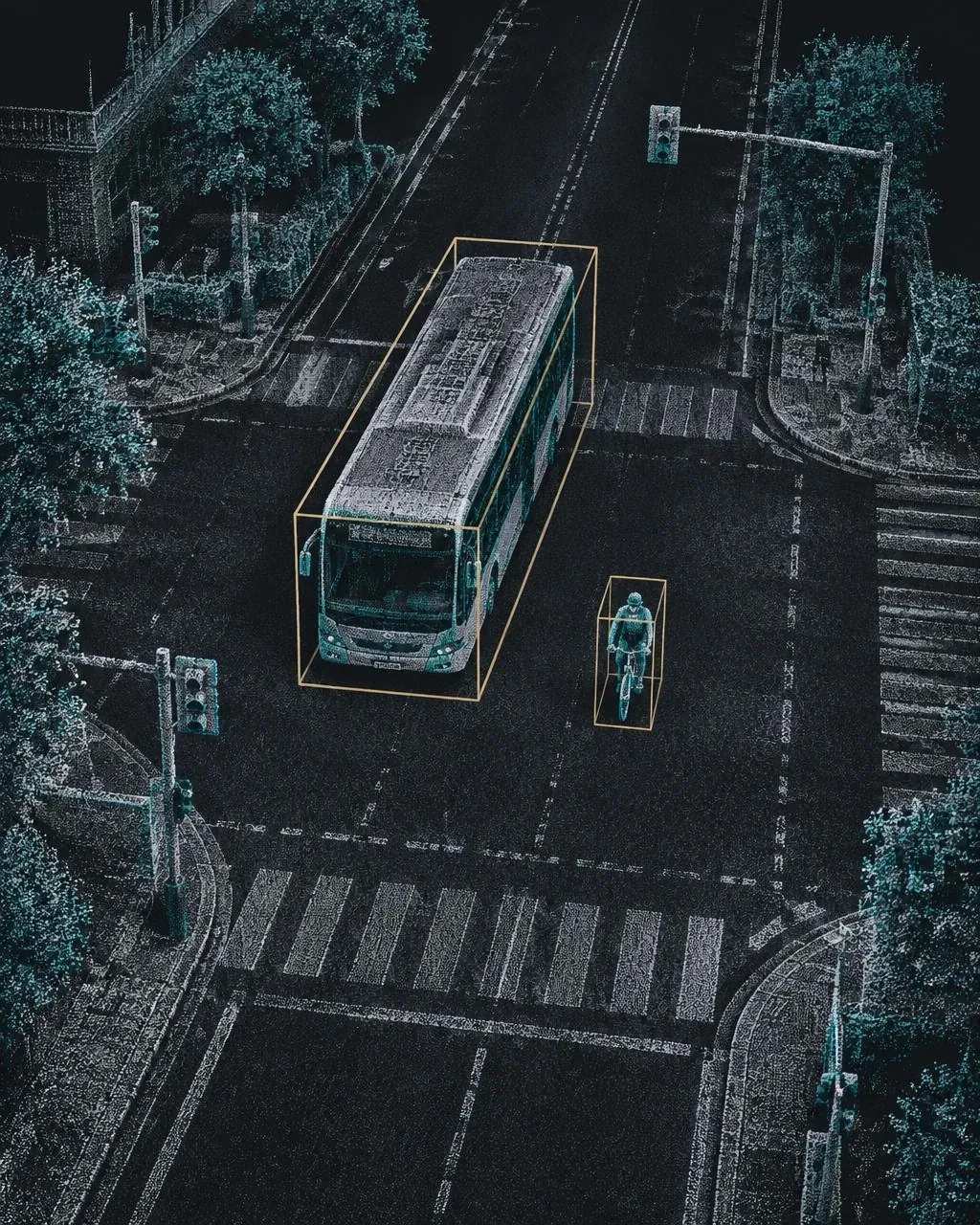
LiDAR & 3D Annotation data annotation example: 3d cuboids, segmentation, landmarks

Spatial datasets need labels that follow the actual geometry of a scene, from sparse LiDAR returns to detailed surface scans.

  • 3D cuboid annotation for vehicles and objects
  • Point-cloud semantic and instance segmentation
  • Facial and object landmark annotation
  • Multi-frame 3D object tracking
  • Mesh and surface-region labeling
10

Egocentric Video

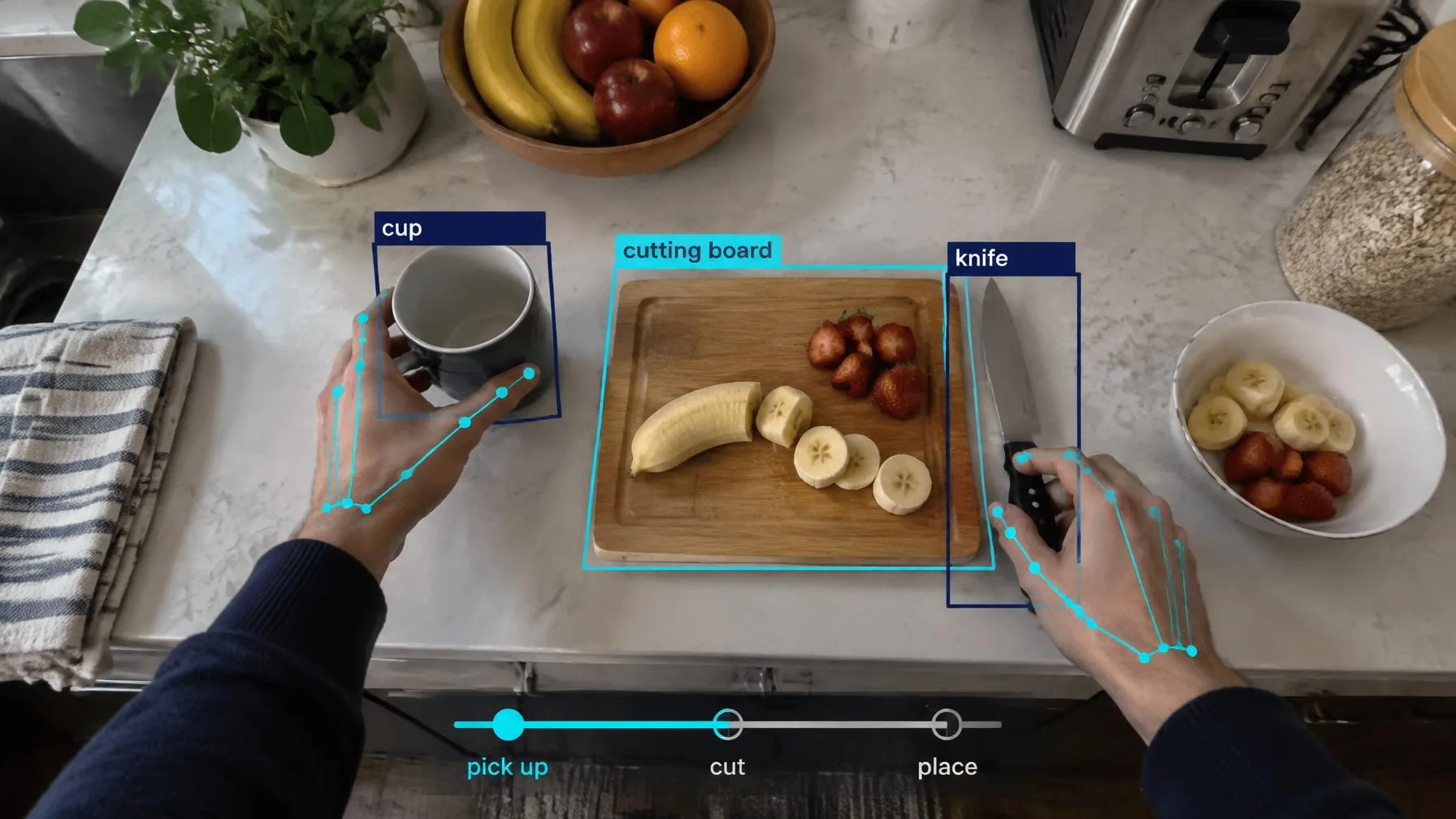
Egocentric Video data annotation example: hand keypoints, objects, actions

First-person footage is labeled so hands, the objects they touch, and each step of an activity stay connected as the camera moves with the wearer.

  • Hand pose and keypoint annotation
  • Hand-object interaction labels
  • Action and activity segmentation
  • Object tracking from wearable cameras
  • AR, robotics and embodied AI training data

Comparison

Why AI Teams Choose VIPRO

Stated VIPRO policies and quality targets, set beside general descriptions of other common annotation models.

How VIPRO managed calibration pods compare with crowdsourced platforms and traditional data-entry BPOs
CriterionVIPRO Managed Calibration PodsCrowdsourced Platforms (MTurk/Generic)Traditional Data-Entry BPOs
Mandatory pilot calibration before scaleYesA free calibration pilot on your data before any volume work.Not typicalUsually not required.Not typicalUsually not required.
Post-calibration precisionYesTargets 98.5% or higher inter-annotator agreement (a measured target).VariesVaries by task and worker.VariesVaries, often sampled spot checks.
Edge-case rubric iteration speedYesRubric updates are versioned and re-calibrated with the pod quickly.Not typicalSlow. Instructions are hard to push to a changing crowd.Not typicalSlow. Change requests go through account management.
Annotator turnoverYesDedicated pods with a zero-turnover policy.Not typicalAnonymous and rotating workers.Not typicalHigh attrition is common.
Native toolingYesWorks natively in CVAT, Roboflow, SuperAnnotate and Labelbox.VariesGeneric task interfaces.VariesSpreadsheets or proprietary tools.
SecurityYesStrict NDA and role-based access.Not typicalOpen worker pool, limited control.VariesStandard office policies, varies.

Typical tasks

A useful starting map

IndustryData typeCommon labels
01AutomotiveImageVideoBoxes, lanes, tracks
02AerialImageVideoRegions, objects, change
03AgricultureImageVideoMasks, classes, keypoints
04DocumentsImageTextFields, entities, layout
05ManufacturingImageVideoDefects, parts, events
06MedicalImageTextRegions, entities, classes
07SportVideoTracks, poses, events
08Waste managementImageVideoClasses, masks, objects
09LiDAR & 3D AnnotationPoint cloud3D mesh3D cuboids, segmentation, landmarks
10Egocentric VideoVideoImageHand keypoints, objects, actions

Inside the work / 03 perspectives

Different worlds. Different annotation decisions.

The useful detail is not just what gets labeled. It is the context the labels preserve for the model that follows.

Aerial data annotation example
Environments & production01 / 03

The world outside the frame.

A label needs to hold up beyond one clean example. Weather, viewpoint, season, and production conditions all change what the model sees.

Automotive
Keep object identity, lane boundaries, and visibility attributes connected across frames and camera views.
Aerial
Account for altitude, object scale, and capture conditions when defining classes and comparing scenes.
Agriculture
Build class definitions around growth stages and field conditions, with explicit rules for overlapping plants.
Manufacturing
Separate defect type, location, and severity from normal variation, reflections, and production events.
Waste management
Distinguish the object from its material and contamination, especially when a single item contains multiple materials.
Documents data annotation example
Documents & clinical context02 / 03

Meaning, not just markings.

A region on a page or a clinical image is only useful when its meaning survives. Relationships, source context, and uncertainty belong in the annotation brief.

Documents
Connect entities to their fields, preserve table structure, and define reading order across columns and irregular layouts.
Medical
Use approved domain guidance for anatomy, findings, and document entities. Route uncertain cases to the designated reviewer rather than inferring a diagnosis.
LiDAR & 3D Annotation data annotation example
Motion & spatial data03 / 03

Carry context through time and space.

One frame rarely tells the whole story. Temporal and spatial labels need a shared reference so identity, timing, and geometry remain consistent.

Sport
Link players, poses, and ball tracks to defined event boundaries, with consistent treatment of camera cuts and off-screen action.
Egocentric Video
Define hand keypoints, hand-object contact, and action boundaries for first-person footage, with rules for fast head motion and objects leaving the view.
LiDAR & 3D Annotation
Agree coordinate conventions, cuboid orientation, segmentation classes, and landmark definitions before labeling point clouds or meshes.

Before the first batch

Questions from your side of the table.

Scope, domain guidance, and the details worth settling before annotation begins.

We work across automotive, aerial imagery, agriculture, documents, manufacturing, medical data, sport, waste management, egocentric (first-person) video, and LiDAR & 3D annotation. The scope depends on the source data, the label definitions, and the decisions your model needs to make.

Yes. A project can bring together images, video, documents, or spatial data. We clarify the relationships between those sources, agree a common label structure where needed, and keep modality-specific rules explicit.

We start from your domain guidance and representative examples. A calibration batch brings ambiguous cases into review, and resolved decisions become part of the working annotation guide before the project scales.

Share the model objective, a representative sample, any existing label guide, the required output format, and the review criteria. Include difficult examples such as occlusion, unusual layouts, mixed materials, or sparse geometry—not just the cleanest data.

We agree access, transfer, retention, and handling requirements before data is shared. An NDA can be arranged before the project begins, and access is limited to the assigned project team. Clinical labeling uses approved guidance and agreed review responsibilities.

Yes. We work from your existing ontology and agreed tooling, test the rules on a pilot sample, and identify gaps or conflicts before production. Export structure and acceptance criteria are confirmed as part of the scope.

Start a conversation

Your industry has its own edge cases.

Discuss the use case, the data, and the decisions that matter.

Request a Quote